Generosity in the Workplace

Generosity in the Workplace

IMG_5656

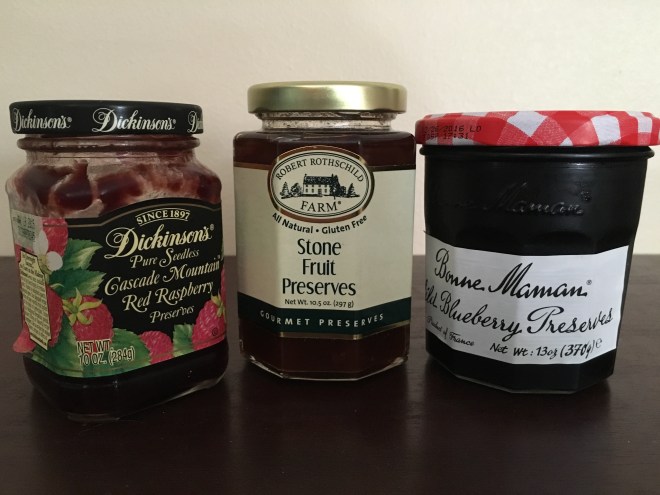
Jelly of the Month

Christmas Vacation Jelly of the Month Club

Do you ever feel like Clark Griswold or do you sometimes feel like Clark’s boss Frank Shirley?

While we may not be in the same situation as Clark and Frank, generosity in the workplace can go a long way. In Christmas Vacation, Clark was dependent on his boss’ generosity and Frank had no idea how his generosity affected others – until he was abducted by Eddie and stood in Clark’s shoes.

Generosity can take many different forms. It is not just about doling out financial rewards at the “end of the year” office party, generosity can be manifested all year round. Merriam-Webster defines generosity as “the quality of being kind, understanding, and not selfish”. The word “quality” means that this is something that becomes part of who we are, not who we are during the holiday season.

Also, they use three words to describe this quality: kindness, understanding, and unselfish. This means that it is not just about giving tangible items, while this may be one part. It can be giving of one’s time and knowledge to both staff members and clients/patients. Taking the extra time to train staff members to excel in their field. Providing a means (CE lectures, etc) to improve your staff’s knowledge base. Generosity can also be extended beyond your staff and current clients and infiltrate into the community. Does your business sponsor events in the community?

While one of the key principles of generosity is not expecting a return, no one can deny the way generosity permeates into the culture of an organization as the leadership team acts from this spirit of generosity. Expect others in your team to emulate this quality and it may even become infectious within your organization.

As the current year ends and a new year begins, think of different ways you can display generosity to both your staff and clients. I would propose that generosity should be more like the “jelly of the month club”, as spoken by Eddie: “Clark, that’s the gift that keeps giving the whole year”.

-Kevin Benjamino DVM, DACVS

Copyright 2015

When to Consider a Total Hip Replacement???

When to Consider a Total Hip Replacement???

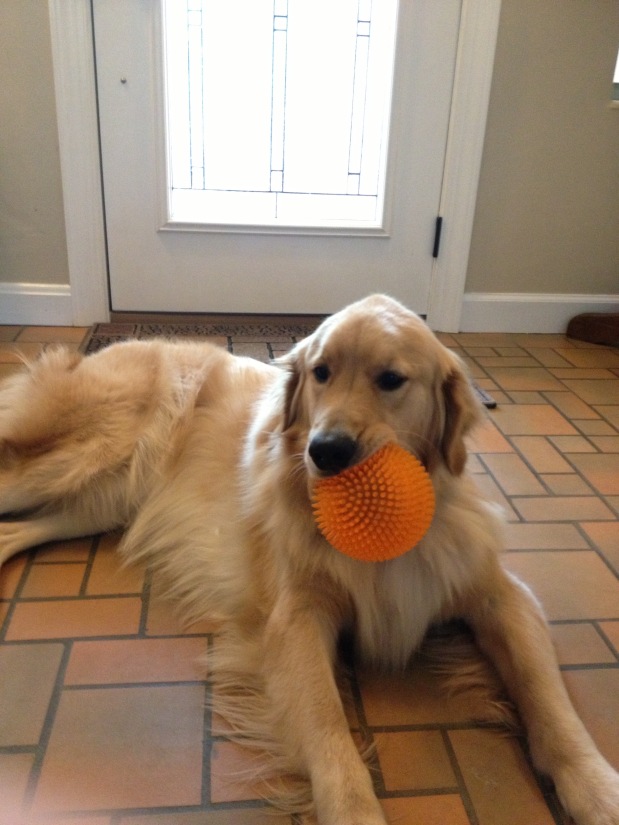
Frankie and Ball

While the thought of a total hip replacement can conjure up thoughts of discomfort, pain and prolonged recovery, most of the time this is not the case. In dogs, total hip replacements have been performed for over 25 years and typically have great success when performed by the experienced surgeon with an experienced team. There are many reasons for total hip replacements in the dog, but the most common reason is as a treatment for canine hip dysplasia.

When considering whether a total hip replacement may be an option for your pet, a consultation with a boarded veterinary surgeon who is experienced in this procedure is the first place to start. Typically your family veterinarian can guide you in this process and make a referral to a surgical center that they trust.  When you are faced with this possible treatment option, you will be overwhelmed with questions and the biggest being, “is this the right thing to do for my pet?” My goal is to try to answer some of the commonly asked questions by owners. While I may be biased since I am a veterinary surgeon, I have also been on the owner side of the equation with my own dog with bilateral hip dysplasia (see Frankie’s Journey).

What are the common indications (reasons) why a total hip replacement would be recommended?

This is one of the biggest questions that I hear and there are actually many reasons that a total hip replacement may be recommended. The most common reason is chronic hip dysplasia. While we see hip dysplasia less than a few decades earlier, we do still see this potentially debilitating disease with some frequency. Hip dysplasia refers to a hereditary issue that induces laxity (looseness) within the hip. This looseness causes subluxation or luxation of the affected hip. Subluxation refers to movement of the femoral head partially out of the acetabulum. Think of a ball and socket joint and the ball(femoral head) is popping out of the socket(acetabulum) with movement. Luxation refers to the femoral head completely coming out of the acetabulum. This alone can cause pain and lameness in puppies and young dogs. In some dogs, they learn to navigate without much discomfort, but the joint will start to develop chronic arthritic changes and cartilage wear that go on to cause pain and discomfort. While we term a total hip replacement an end stage procedure, this just means that in dogs with chronic hip dysplasia and arthritis we always try medical/conservative management prior to surgery. There are dogs that, despite medical management and rehabilitation, are still painful and require surgical intervention; or dogs that need to be on medications continuously for the rest of their lives to be comfortable which would also qualify as a total hip replacement candidate.

Frankie's pre-operative x-rays. Bilateral hip dysplasia.

Frankie’s pre-operative x-rays. Bilateral hip dysplasia.

Other indications for a total hip replacement would include fractures associated with the hip, especially when associated with the femoral head and neck. Traumatic hip luxations are another indication. This is where the hip “pops” out of the joint due to excessive force, such as a dog that has been hit by a car. We do see congenital, chronic hip luxations and acute, non-traumatic luxations, however these cases tend to be at a heightened risk of complications with a total hip replacement. Your surgeon will review the options if your dog has this type of condition. Another indication would be for avascular necrosis of the femoral neck – this is a condition where the blood supply to the femoral neck is altered and reduced during the growth phase. Subsequently the femoral neck and head undergoes cell death (necrosis) which leads to deformation and eventual fracturing. This is more commonly seen in small breed dogs.

What types and sizes of dogs are candidates for a total hip replacement?

We generally think of total hip replacement for larger dogs, which used to be the case. The typical dogs that receive this type are surgery are the retriever and shepherd breeds, since we see hip dysplasia in these dogs more commonly. The standard weights of dogs tend to be 40 pounds and over, however that is changing. With the onset of smaller instrumentation and implants, we now can implant a total hip replacement in a dog as small as five pounds and in some cats.

Isn’t my dog too young for a total hip replacement?

While there are certain age related requirements, there aren’t any exact age requirements. Most of the requirements are based on growth plate closure associated with the femur and in particular the greater trochanter, which generally is closed at around 9-10 months of age (older in giant breed dogs). Some clients will ask, “isn’t my one year old Golden Retriever too young?” My response is “no” if the patient is painful and not responding to the conservative management. The implants themselves have a life span of >15 years, generally exceeding the life expectancy of the pet.

The converse of whether the pet is too young for a replacement is the questions as to whether the pet is too old for the procedure. With older dogs, we need to look at the entire health of the patient and ensure that the patient does not have any other related or unrelated illnesses. Total hip replacements still may be recommended in our geriatric patients.
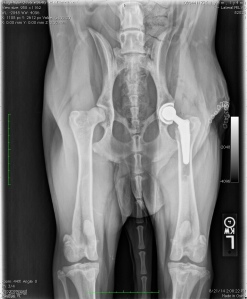
Frankie's post operative radiographs. Left total hip replacement.

Frankie’s post operative radiographs. Left total hip replacement.

What should I expect on my initial consultation for a total hip replacement?

Every surgeon conducts their examinations differently, so here is a brief overview of a standard consultation that I would perform. Obtaining an accurate history is imperative, so be sure to be upfront with what you are seeing at home, when lameness started, what side is most affected, and ALL medications that your pet may be on or may have tried in the past related to treating lameness.

A full physical examination will be conducted looking at general health, orthopedic and neurologic health. During the general examination we are looking for any other issues that may be just as or more important than your pet’s lameness. Some examples are dental disease (potential infection source), heart murmur/cardiac disease, masses palpated on skin, abdomen or on rectal examination, and skin health. Skin infections (even mild) NEED to be treated prior to surgical consideration due to implants being used.

A full orthopedic exam is needed to rule out any other common orthopedic disease such as cranial cruciate ligament (ACL) tears, medial patella laxations, etc., which may require surgical treatment before considering a total hip replacement. A complete neurologic examination is also needed as neurologic disease would be cause for concern.

Below is a summary of the initial consultation:

– Complete examination

– Sedated X-rays. Most patients (even the best behaved patients) will require sedation for radiographs (x-rays) of the hips. We use these x-rays for measurements of implants, so they must be PERFECT. Remember that the reason your pet is seeing a surgeon is because of hip pain, and the positioning of the x-rays may cause some discomfort, so the kindest way to acquire radiographs is with sedation.

– Blood work: Complete Blood Count (CBC), Chemistry profile, and Urinalysis. This needs to be performed at the MOST 30 days prior to surgery to ensure that your pet is a good anesthetic candidate.

– In older patients, additional diagnostics may be recommended such as chest radiographs and an abdominal ultrasound to get a complete health screen.

Assuming your pet is a good candidate for a total hip replacement the procedure will be described to you in detail along with the potential complications, recovery period/rehabilitation, and overall outcome. If for some reason a total hip replacement is not a good choice or another issue is found, other treatment options will be reviewed in depth. I always mention to owners to allot enough time for the consultation since a lot is performed on that first visit.

Will both hips need a replacement?

Every surgeon may have a differing of opinions on this. My thoughts reflect the more conservative viewpoint of 20% of dogs with disease in both hips, need hip replacements in both hips. We tend to see a large amount of patients compensating very well when one hip is replaced. That being said there are some dogs that do require both be performed. The typical time frame for performing surgery on the second side is about six months (sooner in a small number of patients).

Are there other hip procedures other than a total hip replacement?

There are four main surgeries available for hip dysplasia in the dog. The first two have strict time frame/age requirements. The first is called a Juvenile Pubic Symphodesis (JPS) which is a procedure that fuses a growth plate that allows the acetabulum (cup/socket) to cover the femoral head (ball) better. This must be performed in dogs under 6 months of age, before the growth plate closes on it’s own. The second procedure is called a Double/Triple Pelvic Osteotomy (DPO). This is performed ideally in dogs under 10-12 months of age and prior to development of any arthritis. This procedure improves the coverage of the acetabulum over the femoral head and can be very effective in dogs with subluxation rather than luxations.

The two main surgical interventions for adult dogs with hip dysplasia are the Total Hip Replacement (THR), which is the scope of this article and the Femoral Head Ostectomy (FHO). The femoral head ostectomy is a procedure where the femoral head is removed and not replaced. This removes the painful source of the femoral head as it contacts the surface of the acetabulum. This is performed with a degree of frequency in small breed dogs and cats, but is considered in some cases of larger breed dogs. There are some cases where this procedure is the best option, however it has been seen that overall use and function of the limb is diminished when compared to a successful total hip replacement. In some studies, an unsatisfactory result (decreased range of motion and decreased muscle mass) has been described in as high as 40% of cases where a FHO was performed.

The total hip replacement is a procedure that replaces both the femoral side (femoral head and neck) and the acetabulum. This procedure when successfully performed allows for normal, uninhibited movement of the new hip and generally allows for a full recovery. This procedure has been done in many working dogs (police dogs, service dogs, etc.) in which the dog is able to resume its normal “job”.

Are “cementless” implants better than “cemented” implants?

There are definitely pluses and minuses to both systems. “Cementless” implants are also thought of as press fit and have a surface where the bone grows into the implant. “Cemented” implants are held in place by a polymerizing bone cement and is as strong as it will be once it solidifies and dries. We do see a slightly higher risk of infection around the implants with the cemented implants as well as what is termed “aseptic” loosening. Where the bone anatomy allows, we strive to use the “cementless” implants.

What are the potential risks and complications that could occur after a total hip replacement?

During the initial consultation we always cover potential complications. While the total hip replacement procedure has a high success rate, there are always potential complications. The first type of complication would involve implant complications, which can be exacerbated if the post-operative instructions are NOT strictly followed. Our patients, after all, are dogs and will not regulate their activity appropriately, herein lies the owner’s responsibility. If the patient is too active the more common type of complications are implant shifting, luxation of the hip, fracturing of the femur, femoral stem subsidence, and seroma formation. The first three complication would require another surgery. Other complications could include infection (short and long term), aseptic loosening of the implants, etc.

What is the outcome for my pet after a total hip replacement? 

In general, the outcome for the total hip replacement patient is quite good. Ideally the success rate of total hip replacements in the appropriate patient is around 92-95%. The return of function is typically very good and restoration of normal range of motion and improved musculature. The typical recovery/rehabilitation period is about 3 months in total, however it is a gradual ramping up of activity. As I tell my owners, if I can do it with my own dog, you can do it!!

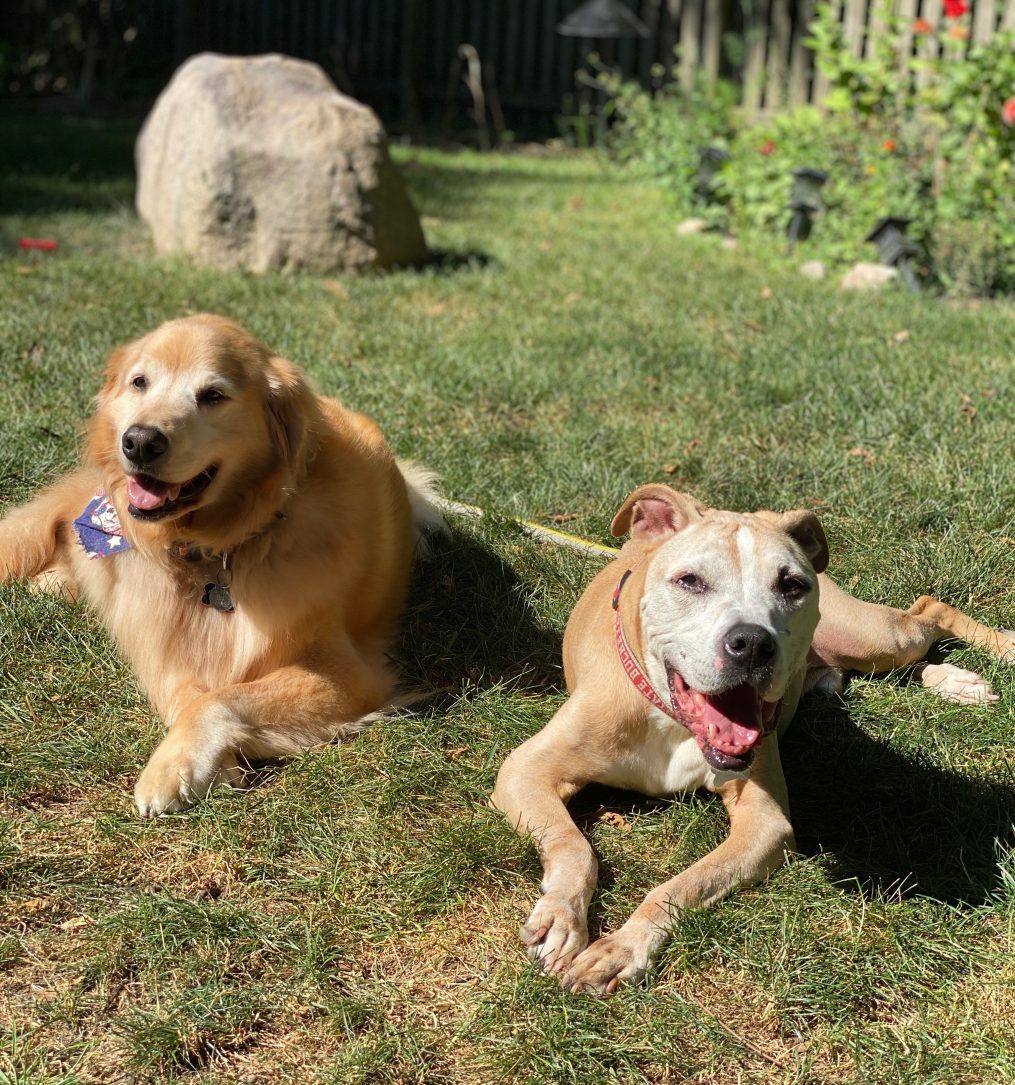
– Frankie one day after a total hip replacement.

– Frankie (and Vinnie) 1 and 1/2 years after his total hip replacement.
The Importance of Direct Communication

The Importance of Direct Communication

Jacksonville Beach

Now before I get started, I will say that this is a topic that I personally struggle with on a daily basis (ask my wife). The more technology advances the more difficult it becomes to have direct, meaningful communication. Maybe it isn’t more difficult, but the alternative of indirect communication becomes easier and easier. I was walking on the beach recently (where the photo above came from) and saw a couple enjoying the sunrise and the waves. On a closer look (no I am not acting as the creepier version of Rob Lowe on the DirectTV ads) both were fully absorbed in their online life on their cell phones. Maybe they were “liking” that video of a singing and dancing cat, who wouldn’t?! It baffled me to think of coming to the beach for a breathtaking sunrise, only to be checking out Facebook; to each their own.

The real question is how often do we find ourselves, like the beach goers, exchanging quality time that could be spent building a relationship with a loved one, co-worker, or client with increasing our online presence? I am not saying that our online presence is to be ignored, it is a great tool that can help build relationships and improve our marketplace visibility. What I am saying is to be careful that we are not exchanging real relationship building opportunities for our mobile devices. Think of this way, Jon Acuff writes in “Do Over” about being present and gives the following scenario (albeit paraphrased): Each of us have been on the receiving or the giving end of the following scenario, you are in the middle of a conversation and either you or the other party pulls out their phone and scrolls through the contents. Who knows what they are doing, probably checking the weather or “liking” a post from a friend, but whatever it is, they have effectively put you on “pause”. Without speaking a word they have said “hang on a minute, because this is more important than what we are currently discussing”. This scenario happens on a daily basis and I am just as guilty of it as the next person.

The applications can be made to ones personal life, however I will let you formulate your own “real life” examples – I never pretend to be a psychologist. What are the professional correlations? Think of your business relationships (staff and clients) as you would your personal relationships for a minute, both demand time and nurturing or at some point when you look up from your computer or mobile device, they may be gone as well as an opportunity. Remember, the art of personal communication cannot not be captured in a text, email, or hitting “like” on social media; it requires time, attentiveness, and work for both parties involved. So much can be gained by a person’s facial expression and body language that gets missed with the indirect communication described above. In your professional life, try devoting more time to one-on-one direct communication, it WILL payoff!

Kevin Benjamino DVM, DACVS
Copyright @ 2015

Seeing the Forest Through the Trees

Seeing the Forest Through the Trees

Bainbridge Island

One of my main reasons for starting this blog was to reach people who may be in need, in distress due to the current condition of their pet, or just plain curious about different disease mechanisms. I tried to address multiple surgical conditions in the dog and cat, because I am a surgeon and try to approach things in a calculated, methodical nature. My overall goal is to help people and pets.

I never in a million years thought I would be writing articles and/or blogs (some may wish I didn’t). I do want to thank the following that I do have to this website. Writing and grammar, not arguably I’m sure, have never been my strong suit. If you wondered if I was a little off, you probably could have guessed – I am LEFT handed. Yes folks, I follow in the footsteps of some famous people: Michelangelo, Ty Cobb, and the list goes on. You would have thought that being left handed would have made me right brained and lean towards, the arts, writing, etc, however I don’t and I am sure my high school English/grammar teacher would have a visceral, gut wrenching response to my writings (I am trying extra hard to paint a picture, just for her).

While I will continue writing posts about disease processes and various cases that are seen through the hospitals at Affiliated Veterinary Specialists, I would like to change focus from time to time, addressing topics that may surpass the practice of veterinary medicine and deviate into the emotional, communication, and management world. How many times have we found ourselves immersed in situations where we have been overwhelmed either with the medical condition of our pet or the declining medical condition of a loved one and thought “if only my doctor would listen to me, to my questions, and concerns”? At times we may feel like the tree falling in the middle of a dense forest – never heard or noticed. At times, we may be the doctor who is trying their best to communicate the gravity of a medical condition to a client or patient and don’t know how to chose our words properly or are rushed by the overbooked schedule we allow. It is not that there is fault to be given, but is there a better way, can we teach ourselves to be a more articulate, caring professional? Can we manage our time better to be a more caring and compassionate professional; for that matter can we maximize our time both at work and at home? How many times do we feel drained emotionally when we come home and don’t have enough compassion for the ones who are supposed to matter most to us? What is the bigger picture, can we “make out the forest through the trees”?

Obviously, there are a lot of topics to discuss and with time and diligence we will cover the big topics. I will try to pull from my own life lessons and the life lessons of others, both professionally and personally (and I will try to make them short and light if possible). As a professional, there are times I do my job well and there are certainly times that I could have communicated differently or acted differently for a more desired outcome. I do expect that some of my future topics will leave me open and vulnerable. I am always open to constructive criticism. For me this altered direction is about self improvement as well – ask my wife how well I separate work and home life, on second thought don’t.

I will leave with this one thought (OK it will be a long thought, I am long-winded). I remember vividly January 1, 2000 sitting in the packed waiting room of a hospital emergency room, while my grandfather was being admitted for congestive heart failure. Being twenty-one years old and that it was New Year’s Day, this wasn’t exactly what I had in mind to say the least. I would have rather been home watching bowl games and celebrating the new year with my friends and family, however I learned a very important lesson that I have taken with me since that lonely day. It was just me in the waiting room filled with people waiting their turn, some in more serious condition than others (many nursing their New Year’s Eve hangover). I can remember the scene like it was yesterday: an elderly man in a wheelchair came up to me and we exchanged the normal small talk and discussing the football games that were being played that day. He asked me where I went to school and what my plans were after school. My answer was well rehearsed, since I knew that I wanted to be a veterinarian from a very early age. I told him my current status of having applied to various veterinary schools when he abruptly stopped me and gave me this word of advice: “No matter what you do, if you are able to help people and animals ALWAYS treat that opportunity as a blessing and a privilege”. It was obvious that he had his run in with the medical profession and I am sure he had both positive and negative experiences. He was right, I was blessed, I had my veterinary school interview at Ohio State University (where I would eventually attend) the day before my grandfather passed away – it was his dream that I go to veterinary school. That man, whom I do not know his name and can barely remember his face, touched a young man that day and it is my goal to impact others in a similar way.

Kevin Benjamino, DVM, DACVS

Copyright 2015

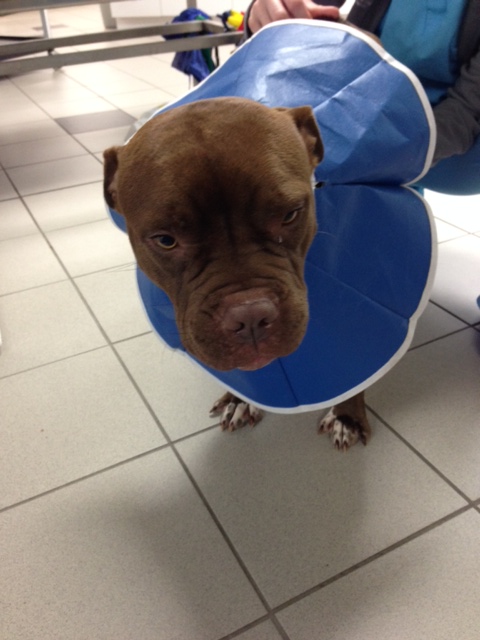
Meet Faith!!!

Meet Faith!!!

Meet Faith!!!

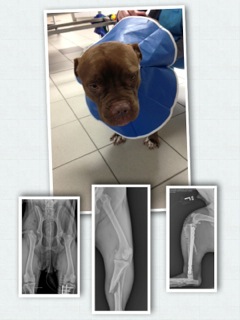
Faith is an adult, mixed breed dog that came to Affiliated Veterinary Specialists – Orange Park from a local rescue group (SAFE Pet Rescue) in the Jacksonville, FL area. She was found and brought to a local shelter and had sustained multiple injuries. We suspect that her injuries were most likely caused by being hit by a car. Unfortunately, her injuries are chronic in nature, probably about 4 weeks old and she has learned how to scoot around and pull herself with her front end.

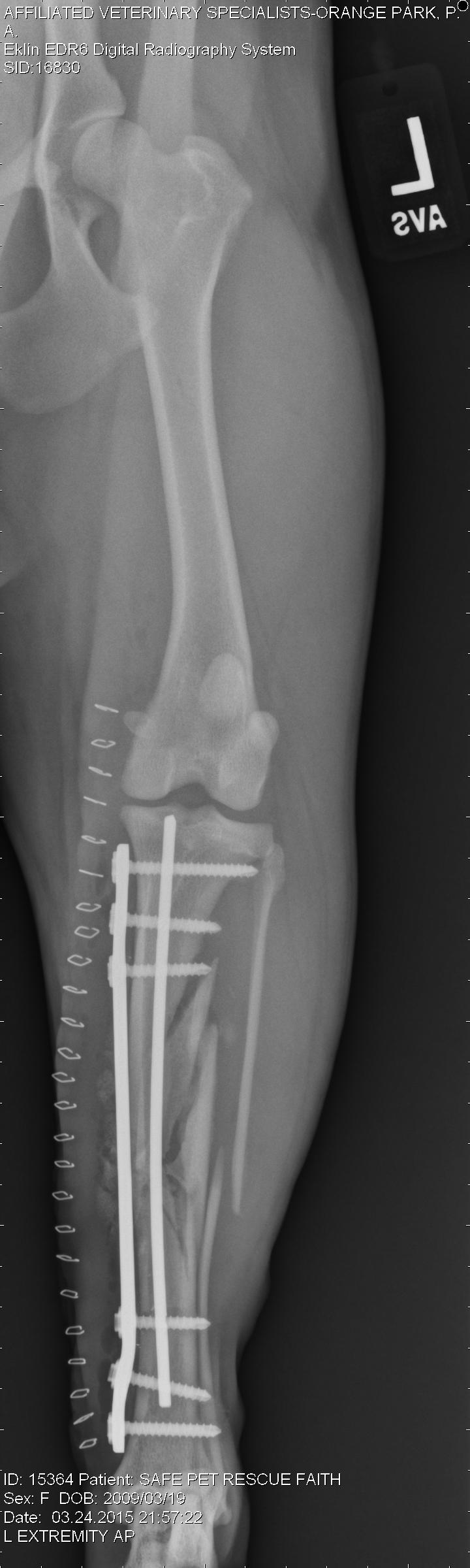
Left tibia/fibula fracture

Left tibia/fibula fracture

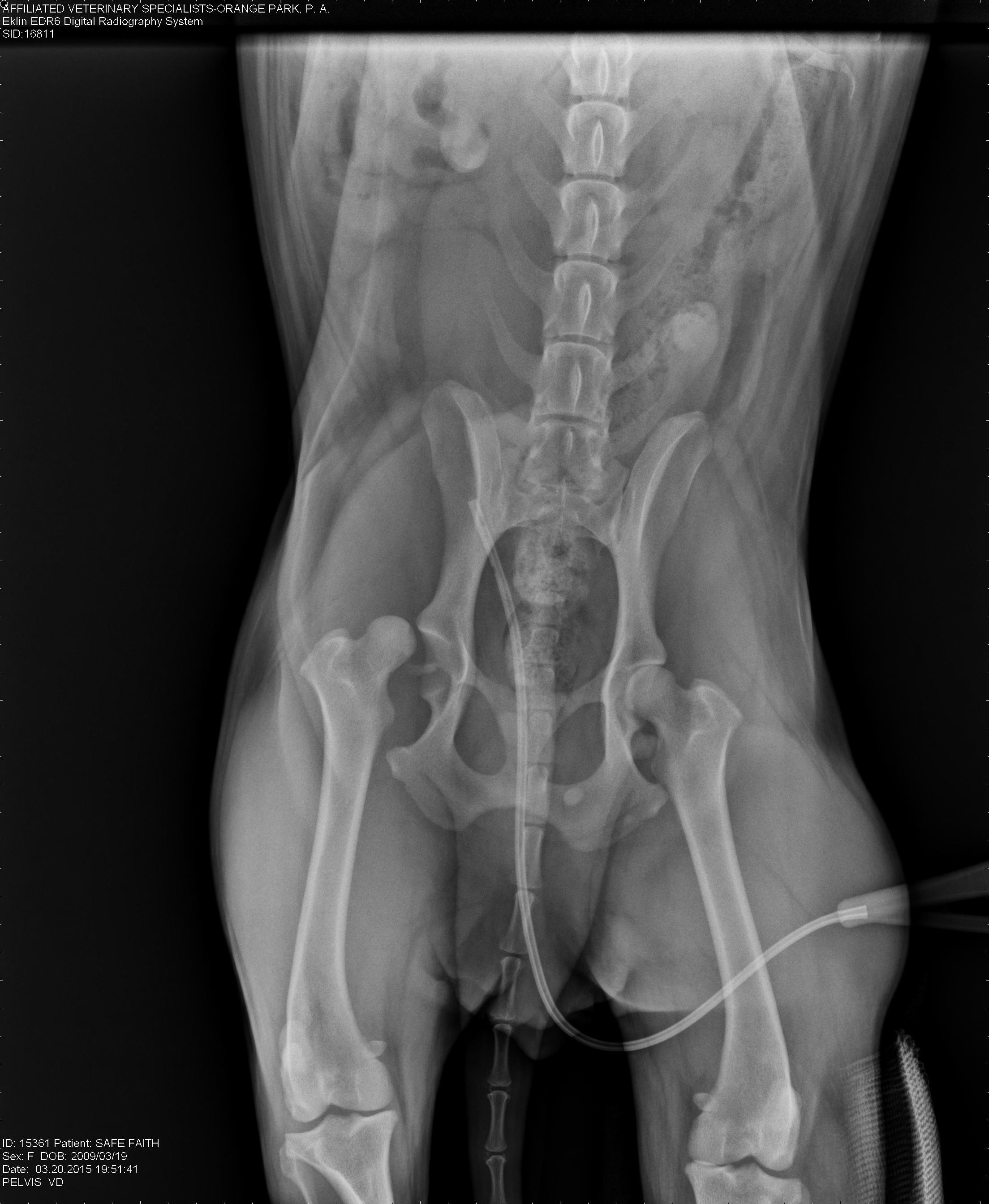
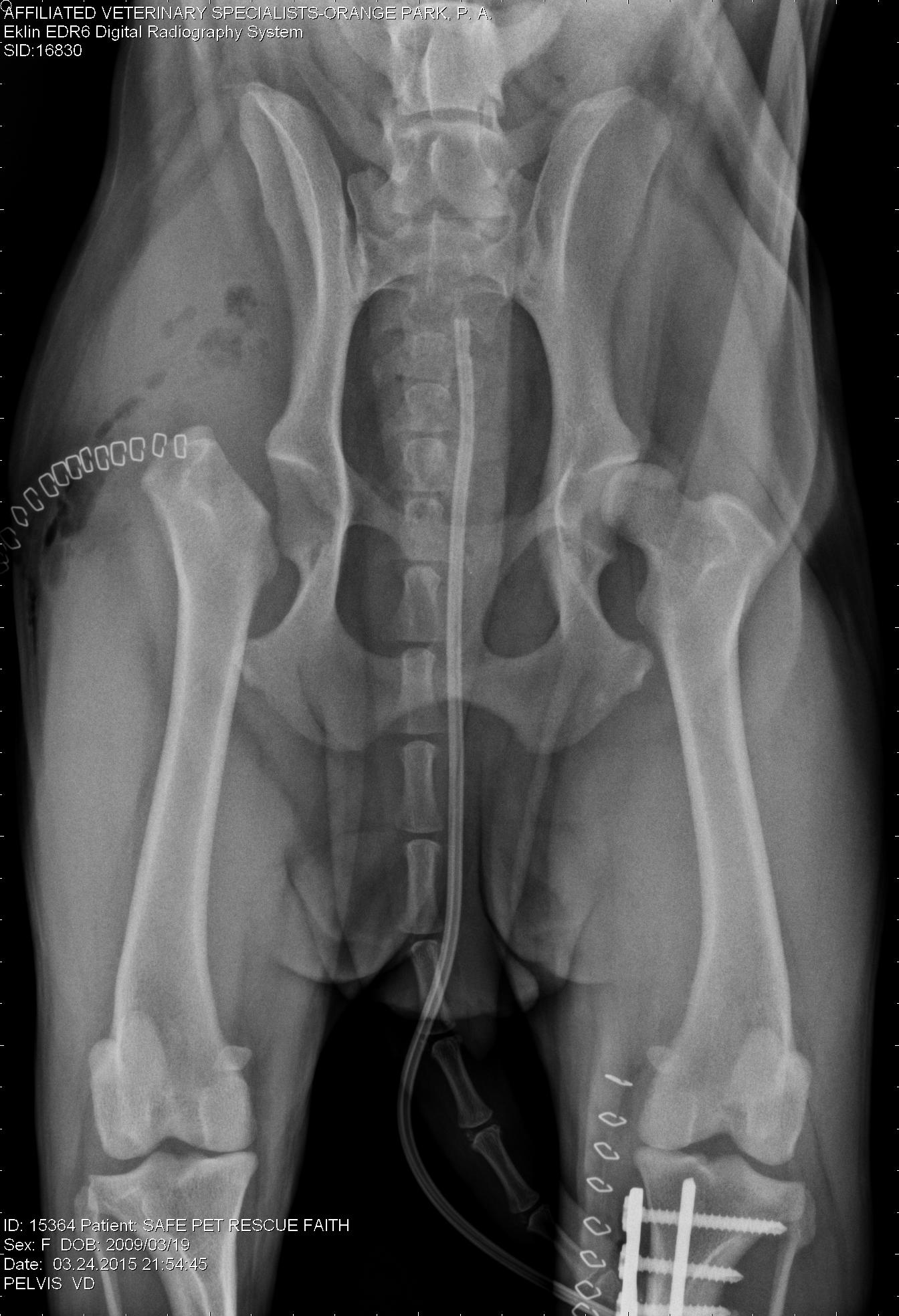
Right hip luxation

Right hip luxation

Her major injuries are a right hip luxation and left tibia/fibula fracture. She has normal neurologic function in the hind legs, however she has no support in the back legs……..until surgery. In addition to her orthopedic issues, she also is heartworm disease positive. The decision was made to address the orthopedic conditions in order to get her mobile and then focus on the heartworm disease. The heartworm disease always makes anesthesia more complicated, but with the proper precautions, she did great. Due to the chronicity of the hip luxation, a femoral head ostectomy was performed and the left tibia/fibula fracture was repaired.

Right femoral head ostectomy

Tibia/fibula fracture repair

Just two days after surgery she is starting to stand on her own and take some steps forward. She is very sweet and has determination. She will make a great addition to someone’s home when she recovered. It is exciting to know that she has been given a well deserved second chance. Please go to the SAFE Pet Rescue website:  http://www.safe-pet-rescue-fl.com or following them on Facebook: SAFE Pet Rescue to learn more about Faith and other adoptable dogs!!

Faith

Faith says “Hello”

January 2015 Case of the Month – Happy New Year!!!

January 2015 Case of the Month – Happy New Year!!!

Mieka

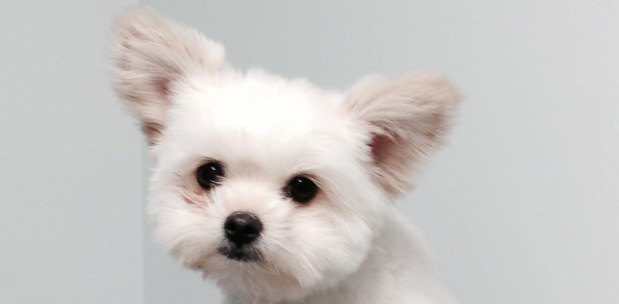
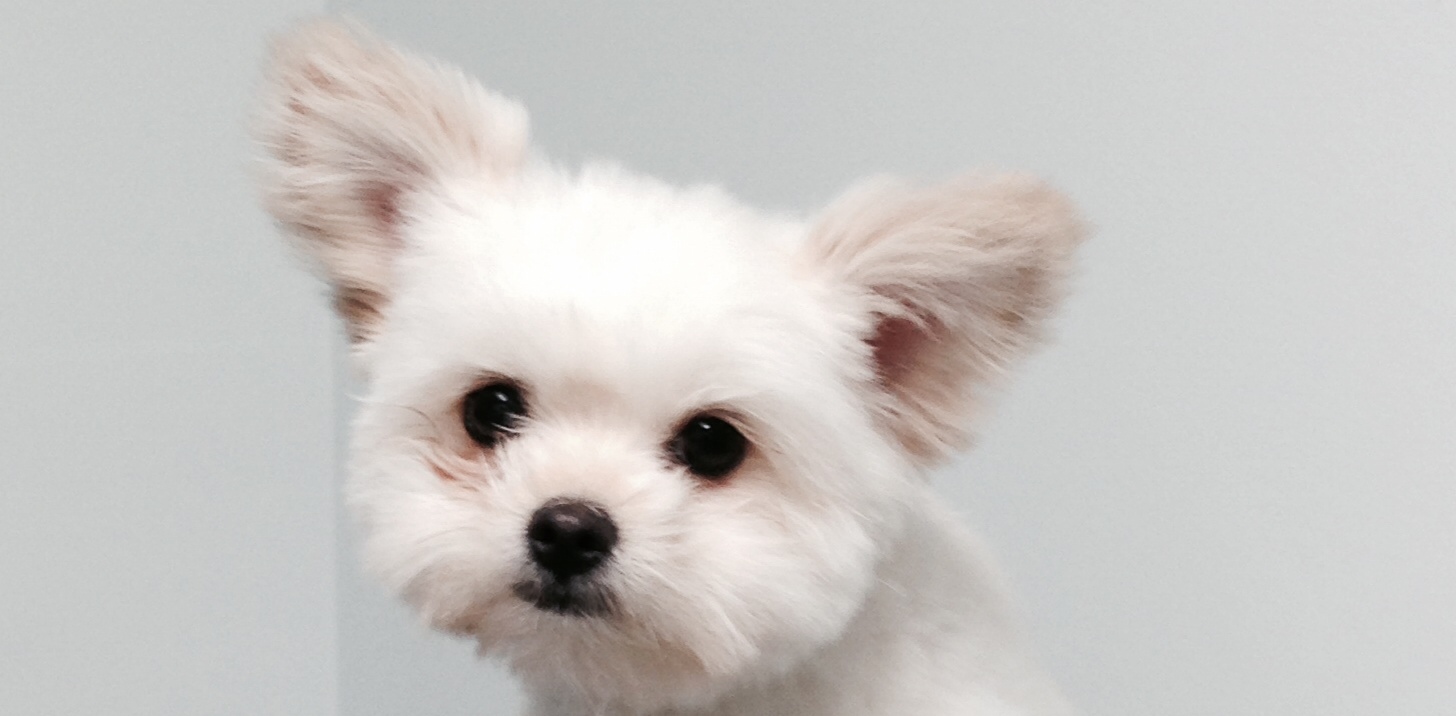
Happy New Year, 2015!!! Meet Mieka, she has made the January 2015 Case of the Month (COTM). Read on to hear about her story!!!

Mieka was selected for the COTM and rightfully so, her story began about a year ago and her total recovery took about 6 months. She is a sweet Pomeranian with a vivacious personality, as you will see in the videos below. She can be quite demanding, but with all that she has been through, we will let it slide.

Mieka presented when she was 7 months of age. She was adopted when she was 2-3 months old and according to her owners never really walked normally. As she developed and got older, her walking declined to the point that she would not place normal weight on the hind limbs and would walk with an arched back and her hind legs crossed. Below is a video of her at the initial presentation.

Based on the examination and x-rays taken, her diagnosis was complex with severe expression of congenital/hereditary diseases affecting both her stifles/knees, patellas (knee caps), and hips (hip dysplasia and bilateral hip luxation – out of socket).

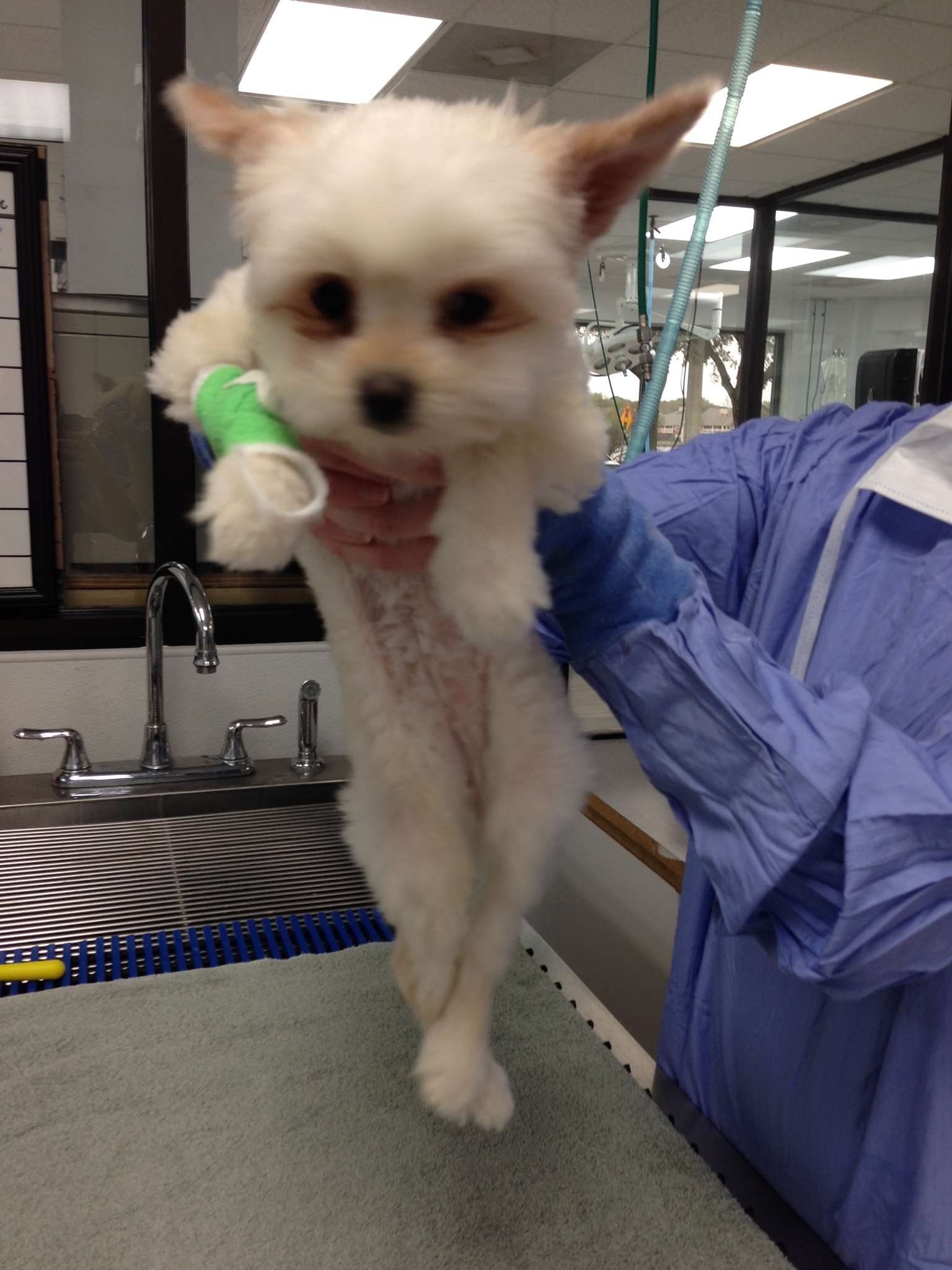
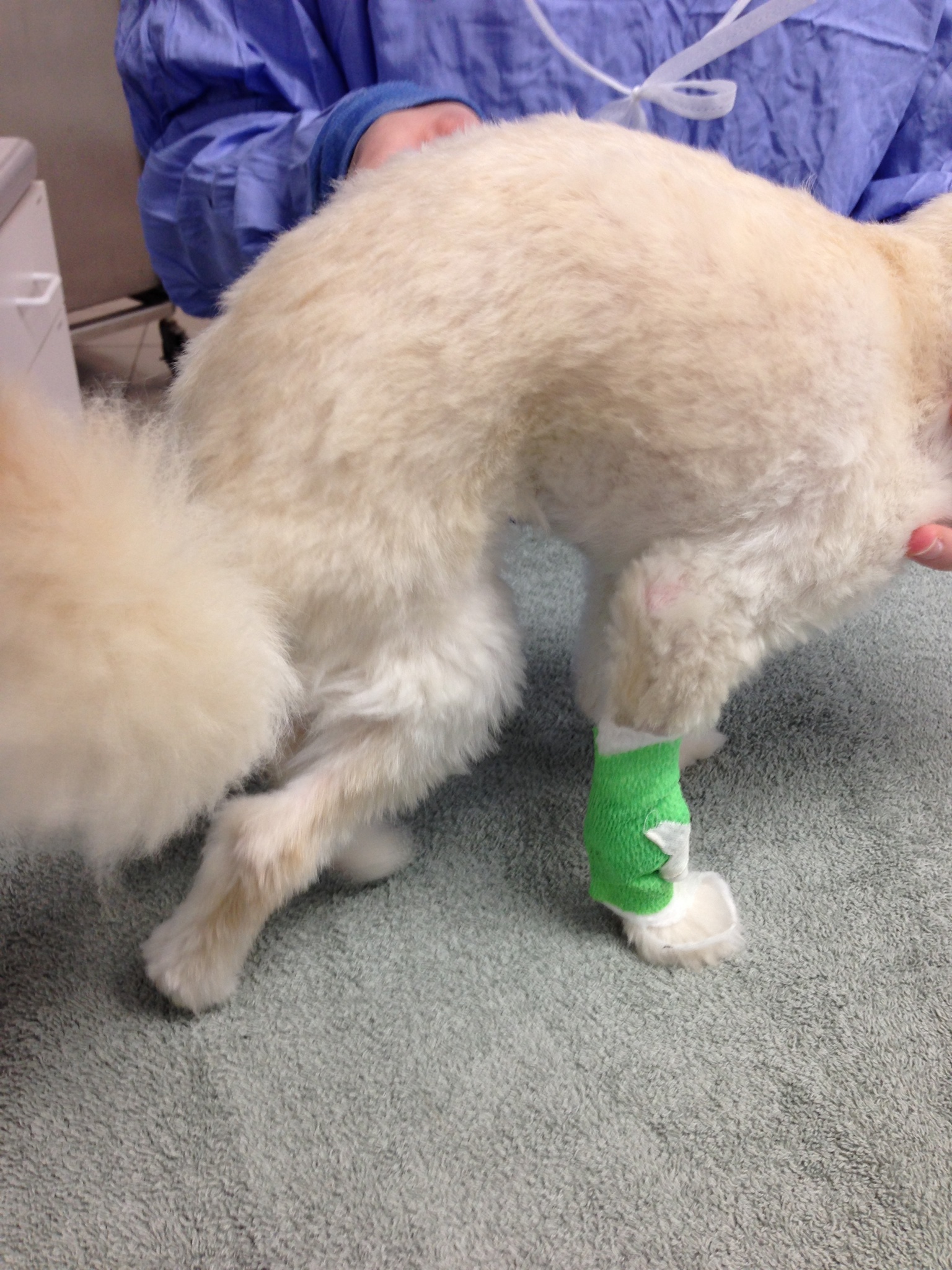
It is fairly rare to see these conditions, this severe in such a young dog. We see knee cap/patella issues very commonly in small breed dogs – but not this severe. She has what is called medial patella luxation (Grade 4/4), this is where the knee cap slides inward and in her case both were permanently fixed in the wrong position. Due to the severity of the knee caps, the attachments points on the tibia were also malformed as well as the bottom part of the femur. As for her hips, she had severe hip dysplasia to the point where the hips would “pop” out of joint during motion. Here are some pictures and x-rays that show some of the deformities.

Note the hind limb deformities and the crossing over of her legs.

Note the hind limb deformities and the crossing over of her legs.

Note the positioning of the hind legs.

Note the positioning of the hind legs.

Note that her patellas are located inward and that on this x-ray the left hip is out of joint.

Note that her patellas are located inward and that on this x-ray the left hip is out of joint.

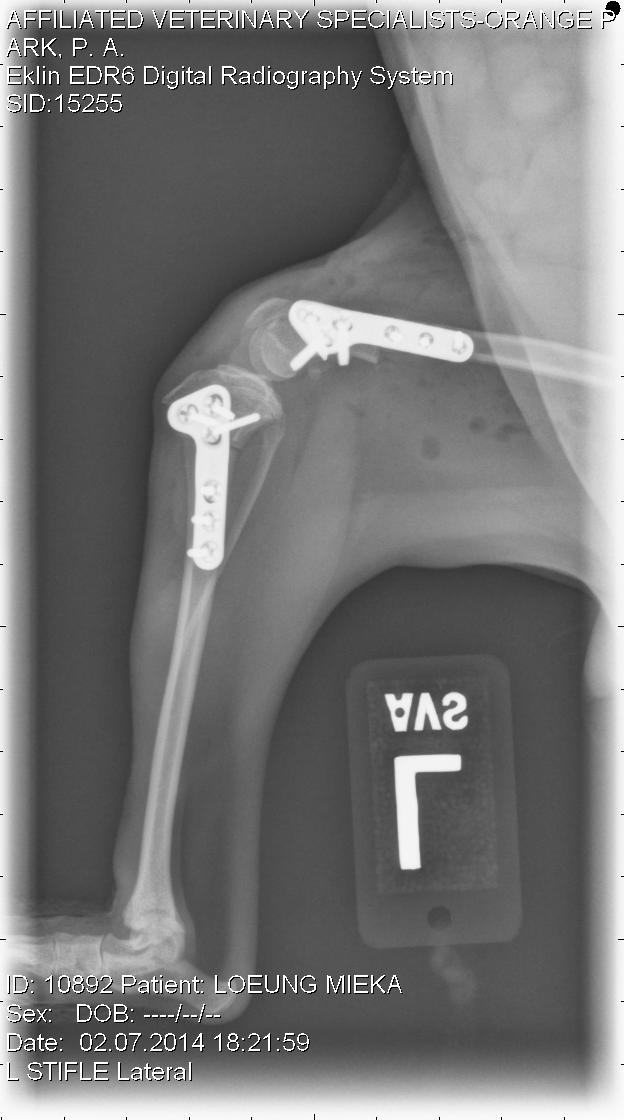
Not to bore with all the details of surgery, but four surgeries were planned for Mieka. We decided to start with the left side, however both were bad. We corrected the alignment in her knee by correcting the deformities in the tibia and the femur and then secured the patella. In order to correct the alignment, we had to cut the bones (tibia and femur) and adjusted with a plate and screws. Once she began to heal from that surgery, we addressed the hip by performing a femoral head ostectomy (removal of the femoral head).

Note the more normal appearance of the tibia, femur and patella.

Note the more normal appearance of the tibia, femur and patella.

With the assistance of the physical therapy department and the dedication of her owners, she rapidly began to improved. As soon as she was strong enough on the left side, the right side was tackled. The same procedures were performed on the right side as well as intense physical therapy following surgery. Below is Mieka about two months after the last surgery. You can see how demanding she can be as she makes herself known. We are thrilled to see her do well.

The shortness of this post underscores the journey Mieka endured. She has definitely earned a case of the month distinction and more. Way to go Mieka!!!

Metronomic chemotherapy – is it the right choice for your pet?

Metronomic chemotherapy – is it the right choice for your pet?

This is a great explanation of a different type of chemotherapy method.

Growth Factors

In order for tumor cells to multiple and spread, they must develop their own blood supply through a process called angiogenesis. Angiogenesis inhibitor chemotherapy drugs work to stop or slow down this process, thereby controlling tumor growth. Metronomic chemotherapy is one example of angiogenesis inhibition treatment, which is becoming a popular treatment option for pets with cancer.

The definition of metronomic chemotherapy is variable, but usually refers to the continuous administration of low doses of oral chemotherapy drugs designed to target the endothelial cells lining the blood vessels supplying tumor cells.

When traditional cytotoxic chemotherapy is administered at maximally tolerated doses (MTD – see previous blog article entitled “Is the remedy for cancer worth the cure?”), death of the endothelial cells lining the blood vessels of tumor cells occurs first, followed by the death of the tumor cells. When we administer chemotherapy in this manner, we typically need to give…

View original post 799 more words

Top 5 List for a Safer Holiday Season

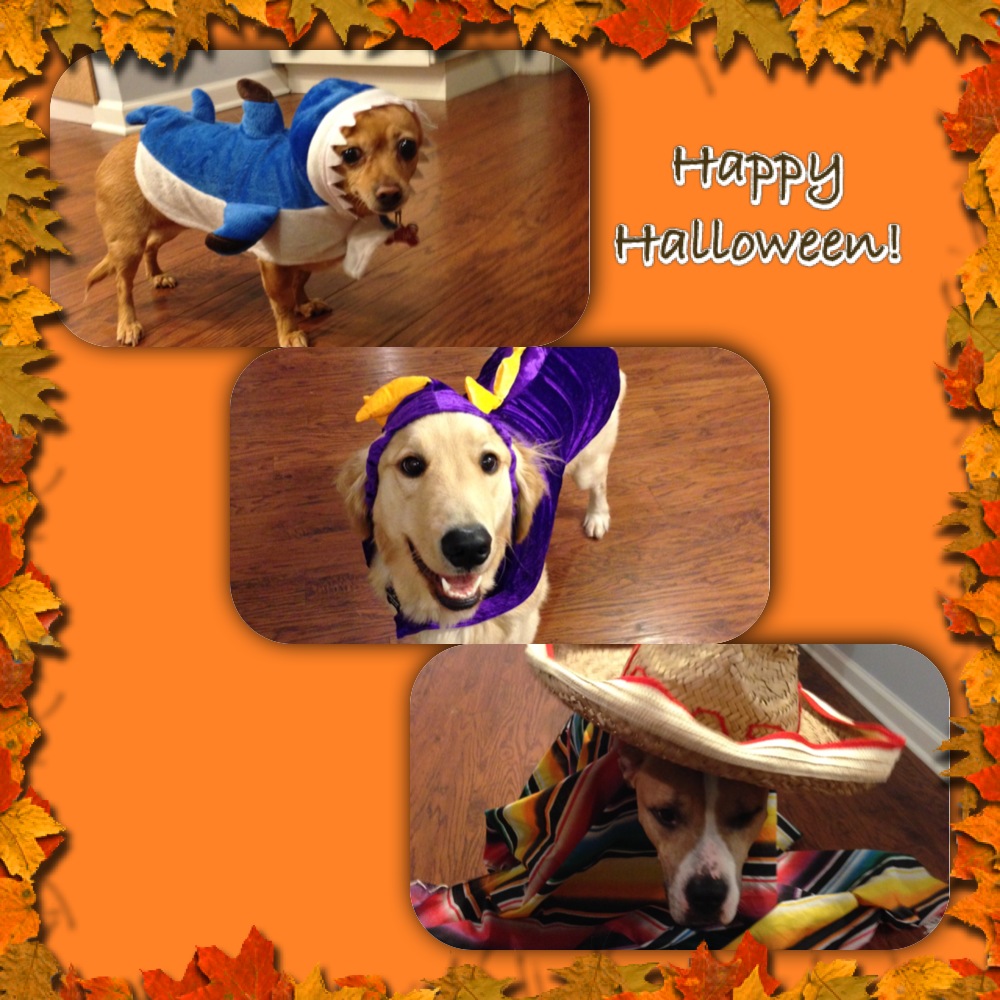
Happy Halloween!!!

As Halloween and the upcoming holidays are rapidly approaching, we are often wrapped up in family gathering, parties, and other activities and forget about the well being of our beloved pets. I tried compiling a short list to help keep our pets healthy and out of trouble this holiday season. This should ensure that everyone has a happy holiday season and may save you and your pet from needing emergency trips to veterinarian or emergency clinic.

1. Keep candy away from pets, in particular chocolate and candies made with xylitol and other sweeteners. While these taste good, they can have very harmful effects on your pet, ranging from liver failure, seizures, and as severe as death. If you suspect your pet has consumed any of these, seek veterinary care immediately.

2. Keep a close on the whereabouts of your pets. With all the excitement and increased visitors during this time, make sure your pets are accounted for and haven’t run off. Missing pets and subsequent trauma, such as being hit by a vehicle is an all to common occurrence during this time. Make sure your pets are in a safe place when company is over.

3. Keep pets out of the garbage and from grabbing food off the table. Bones and fatty meats can cause illness in our pets, especially dogs. Bones can cause a lot of irritation and in some cases puncture the gastrointestinal tracts. Fatty foods are not good for our pets and can cause pancreatitis and other gastrointestinal issues. Pancreatitis can range in severity and needs to be treated by your veterinarian.

4. Keep cords and electrical wiring away from your pets. Both cats and dogs can find wires enticing. Electrocution injury can be very severe and cause death in some cases. If you believe your pet to have be electrocuted, have them evaluated by your veterinarian immediately.

5. Keep easily ingestible objects away from your pets. Objects that can be easily swallowed can cause gastrointestinal irritation and obstruction. Some objects that can become obstructive are clothes, small toys, tinsel, etc. Gastrointestinal obstructions demand immediate veterinary care. There are times when the object can pass, but most of the time your pet will need surgery to relieve the obstruction, Surgery can range from a single incision in the stomach to removal of a segment of intestine. In extreme cases this condition can be fatal.

October 2014 Case of the Month

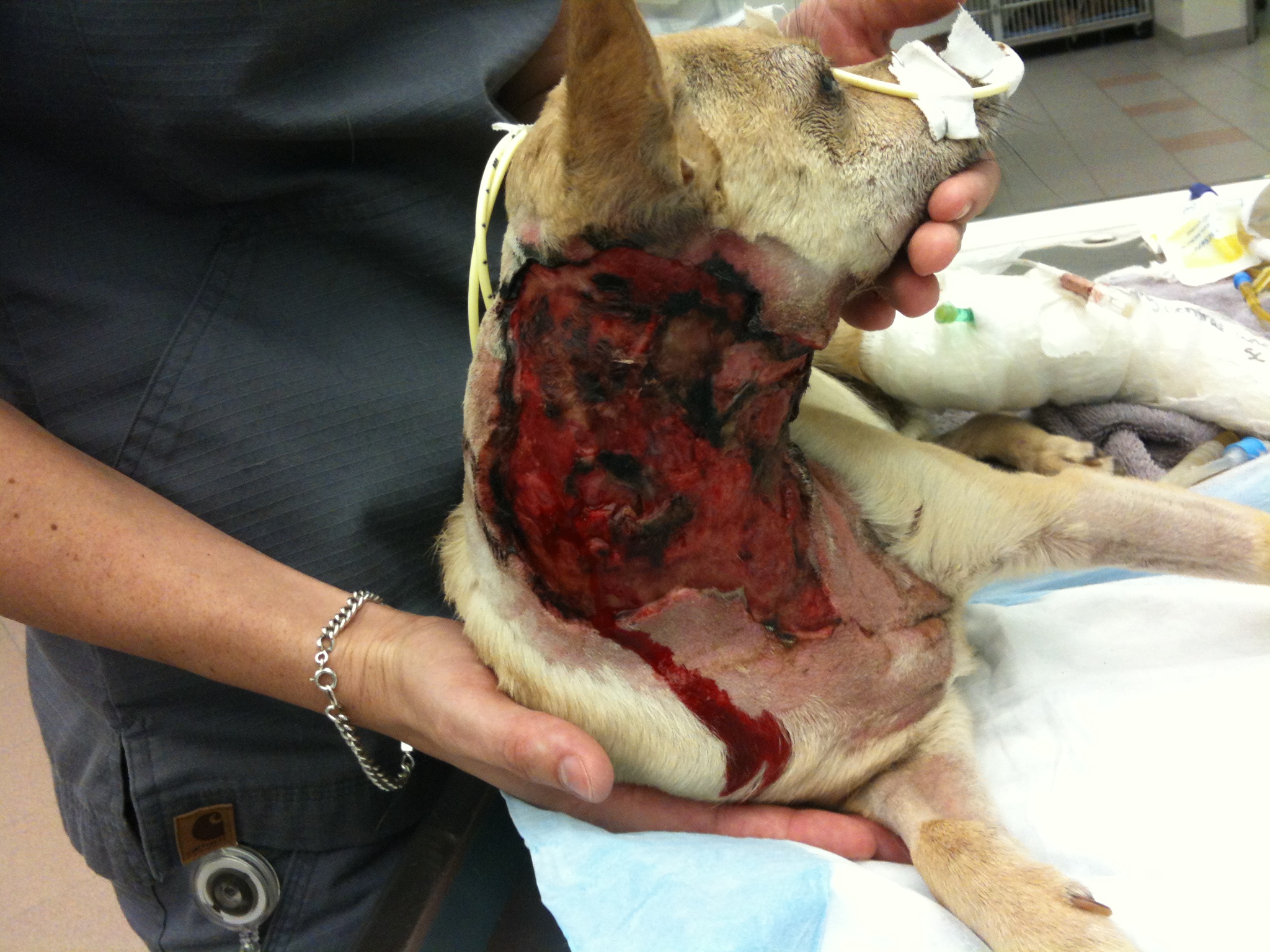
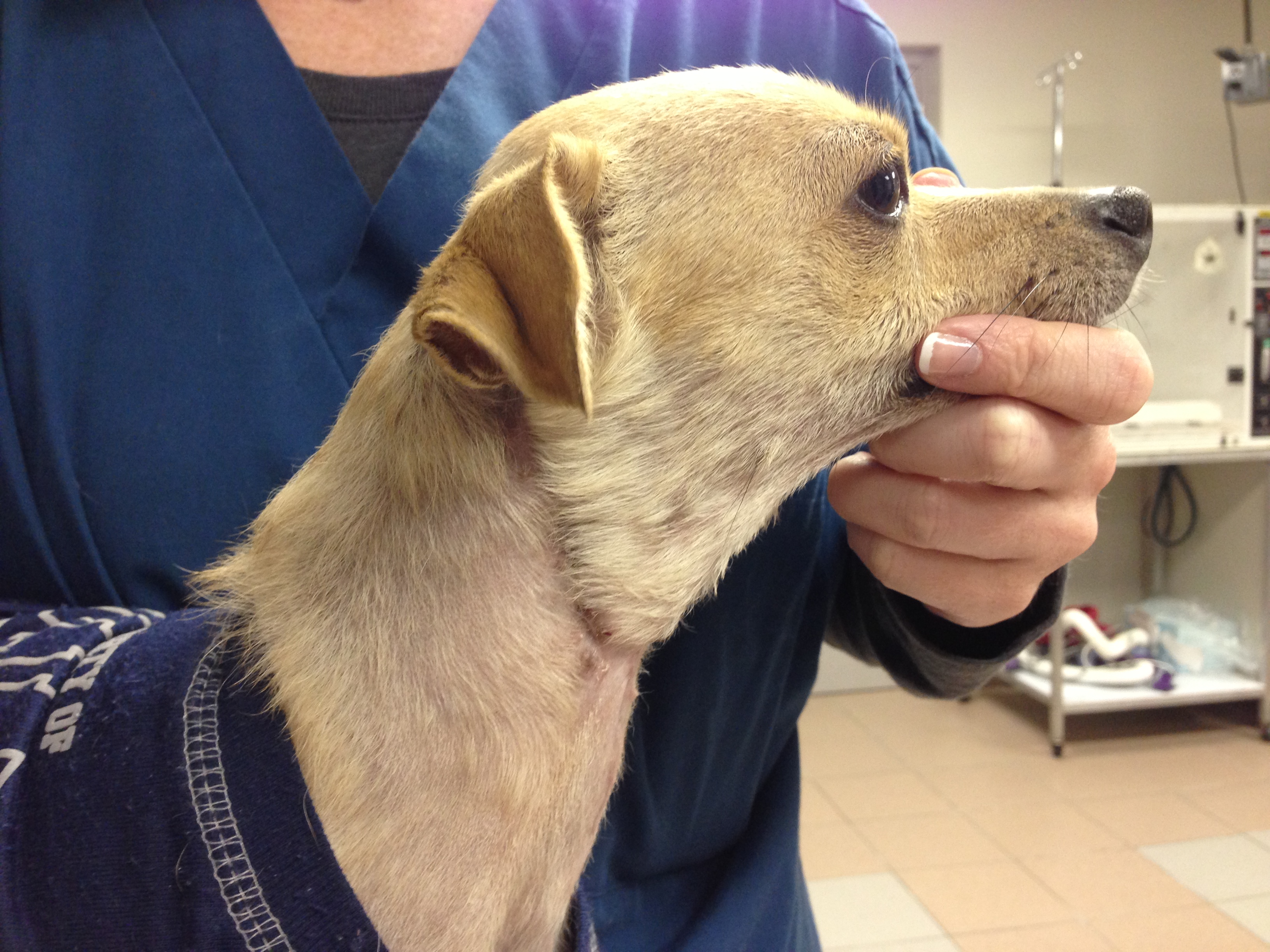
October’s case of the month is an interesting one. Lucky is a young chihuahua mix that came to us with SEVERE injuries. He was attacked by a neighborhood dog about 7 days before presenting to us and was in very bad shape. His initial wounds were managed, but unfortunately infection still set in and the majority of his cervical (neck) skin started to die and needed to be removed. Not only was the infection causing a problem locally, but we had signs of it being spread systemically (through his blood stream). He needed both surgical care and care by a criticalist(board certified in Emergency and Critical Care) in order for him to have a fighting chance. Below is a picture of what he looked like when he was admitted into the hospital.

This was Lucky as he was admitted to the hospital.

This was Lucky as he was admitted to the hospital.

You can make out the extensive injuries on the photo above. He was fortunate to be alive! Whenever we get a case like this (unfortunately it happens more frequently than we like), we am always realistic with the owners, because there is a chance that their pet will not survive. Also, these cases are not quick cases, Lucky was hospitalized for 2-3 weeks and wasn’t fully healed for about 6 weeks. Our first objective is to get the systemic infection under control and get him strong enough to be able to handle surgery. While the criticalist was working on the systemic infection, we were concentrating on the neck wound.

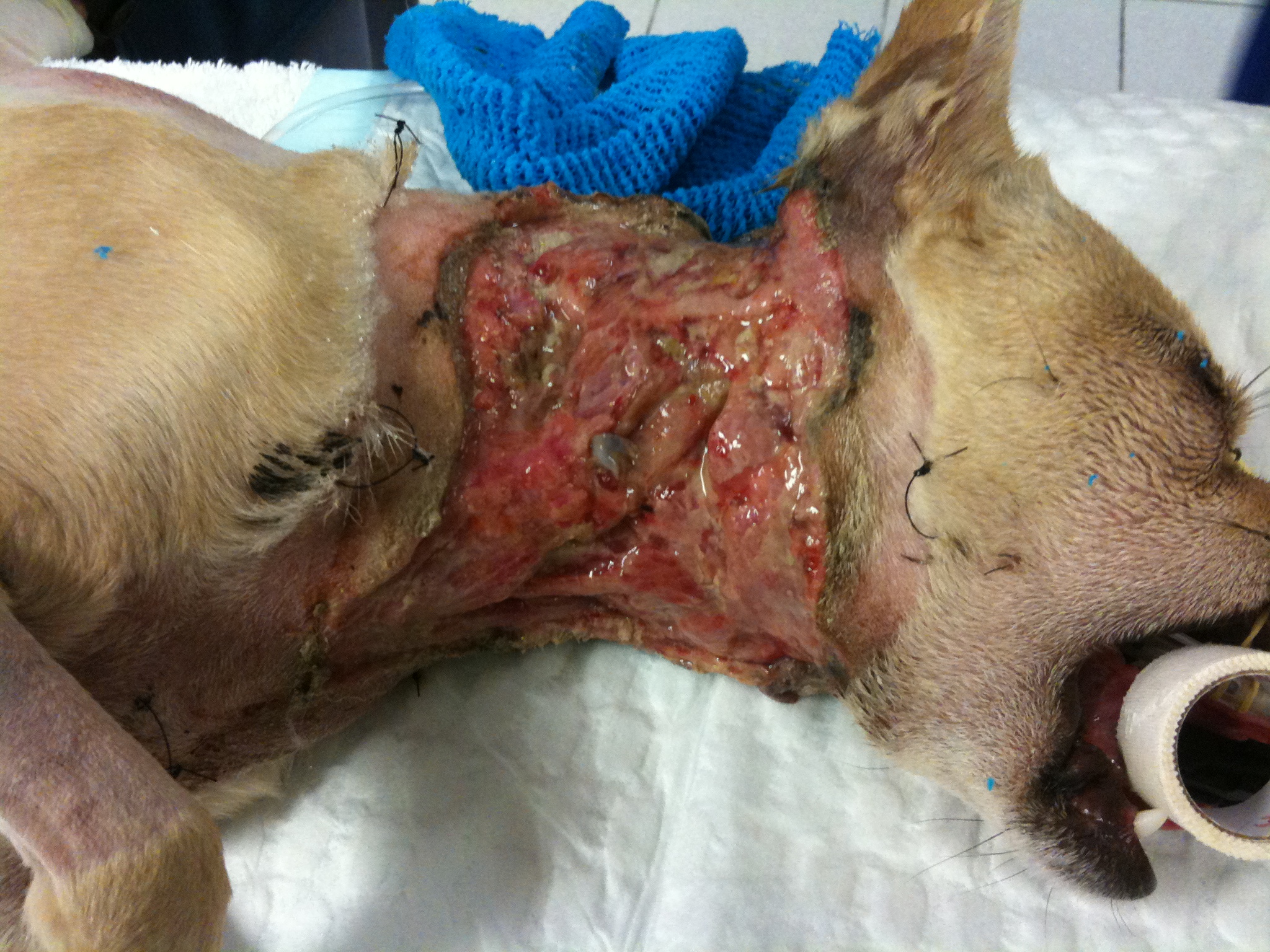
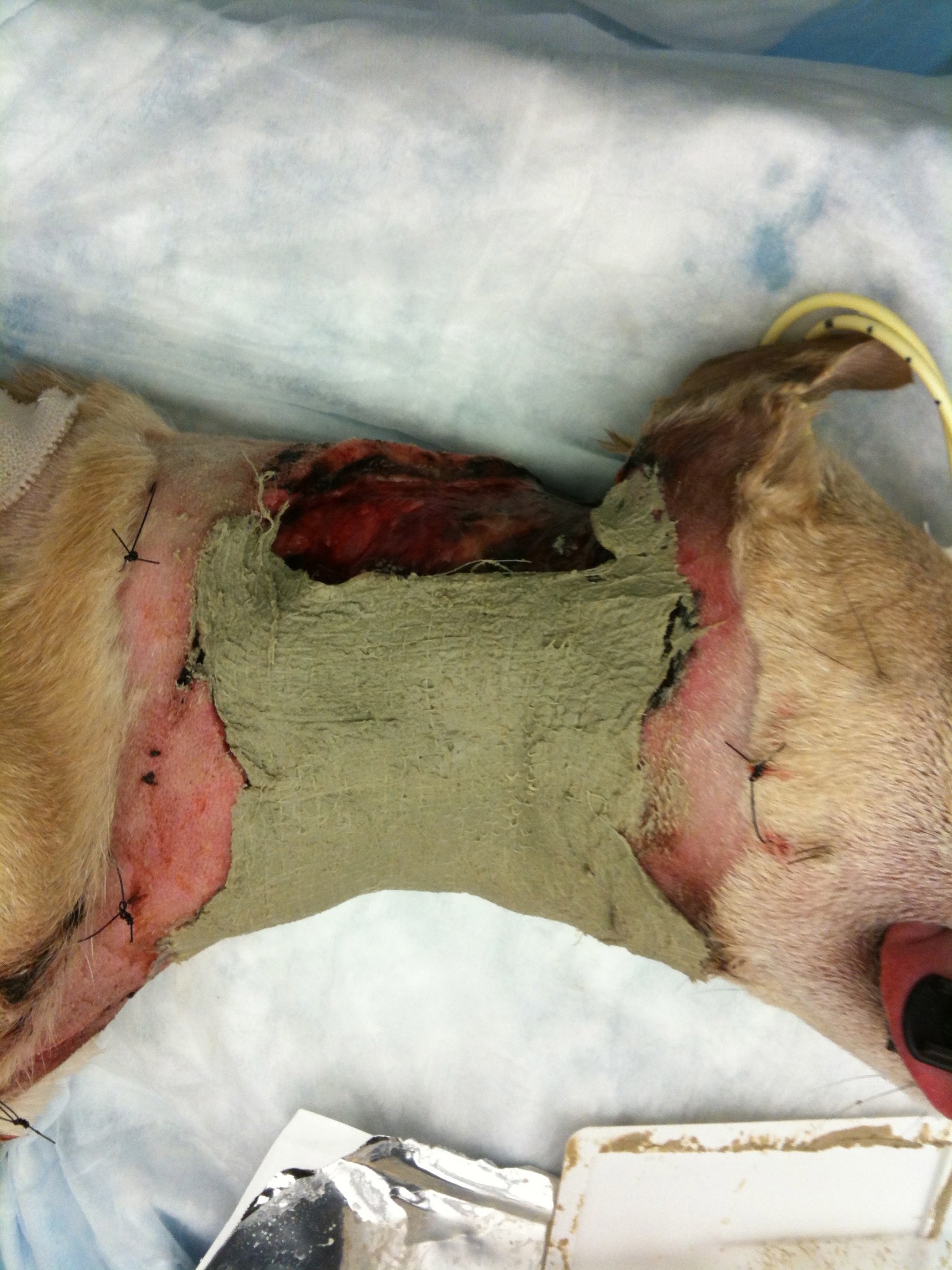
The first phase wounds go through is the debridement phase, which is where the body gets rid of necrotic (dead) tissue and the size of the wound is established. The next phase to follow is the granulation phase. The granulation phase is very important in a large wound like this, this is when the body begins to infiltrate the wound with healthy tissue and more importantly capillary vessels, which bring blood flow. For this wound, I choose to use a wound dressing called BurnStat (Ubuntu) which is a dressing that can be used through multiple phases. It is an organic clay substrate that does an excellent job of removing toxins and necrotic tissue while promoting granulation tissue formation.

Debridement phase

Debridement phase

Applying BurnStat as the primary wound dressing

Applying BurnStat as the primary wound dressing

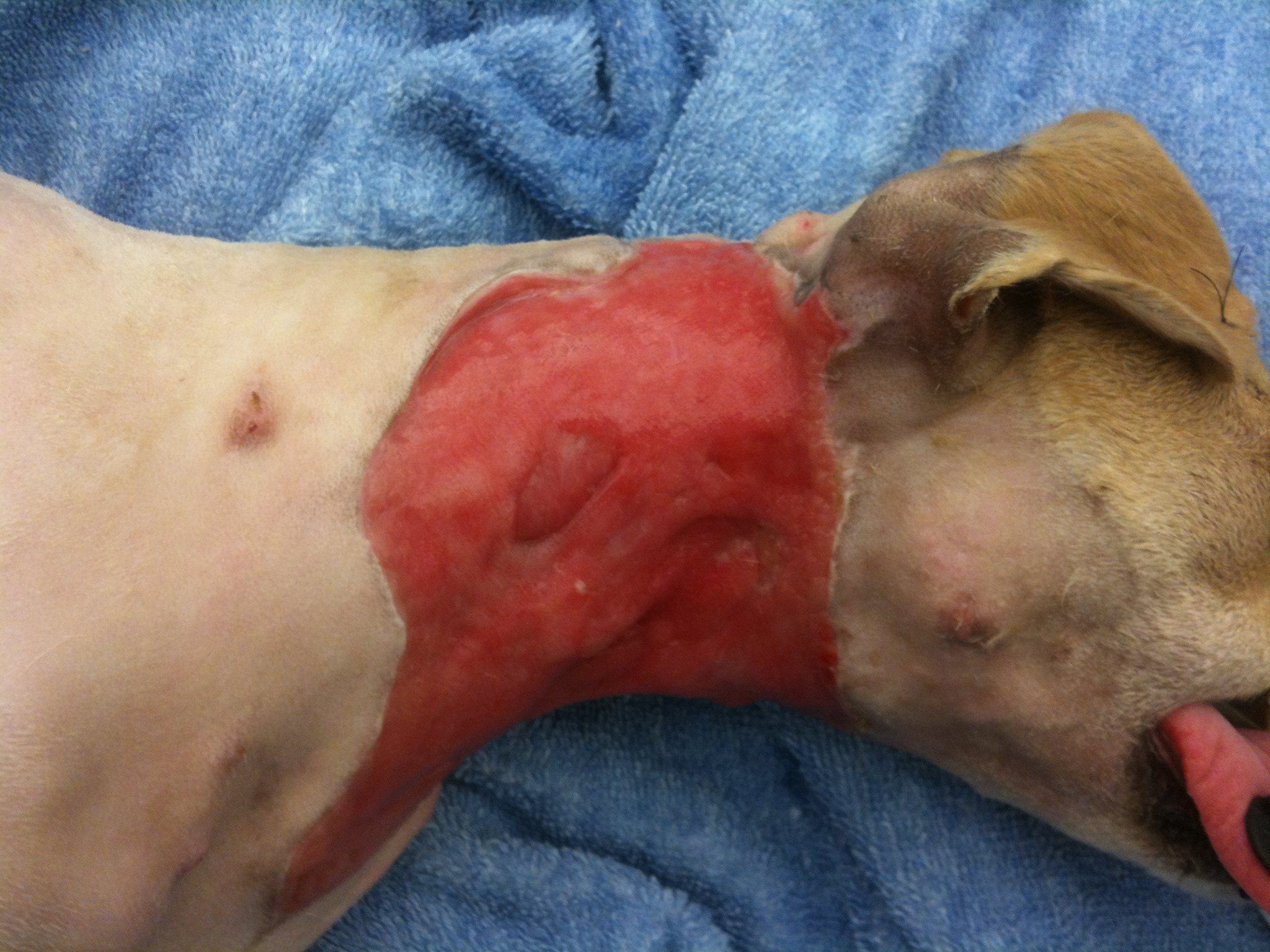
Following this type of bandaging, the diseased tissue begins to be replaced with more healthy, red granulation tissue. The final product, before being able to close the wound, needs to be completely covered with granulation tissue in order to increase the chance of the new skin being accepted.

Complete coverage by granulation tissue.

Complete coverage by granulation tissue.

You can see how the surface is covered with healthy looking tissue and no presence of dying tissue visible. By this time Lucky amazingly over came his battle with the widespread infection and overall was doing very well. He was making a remarkable recovery.

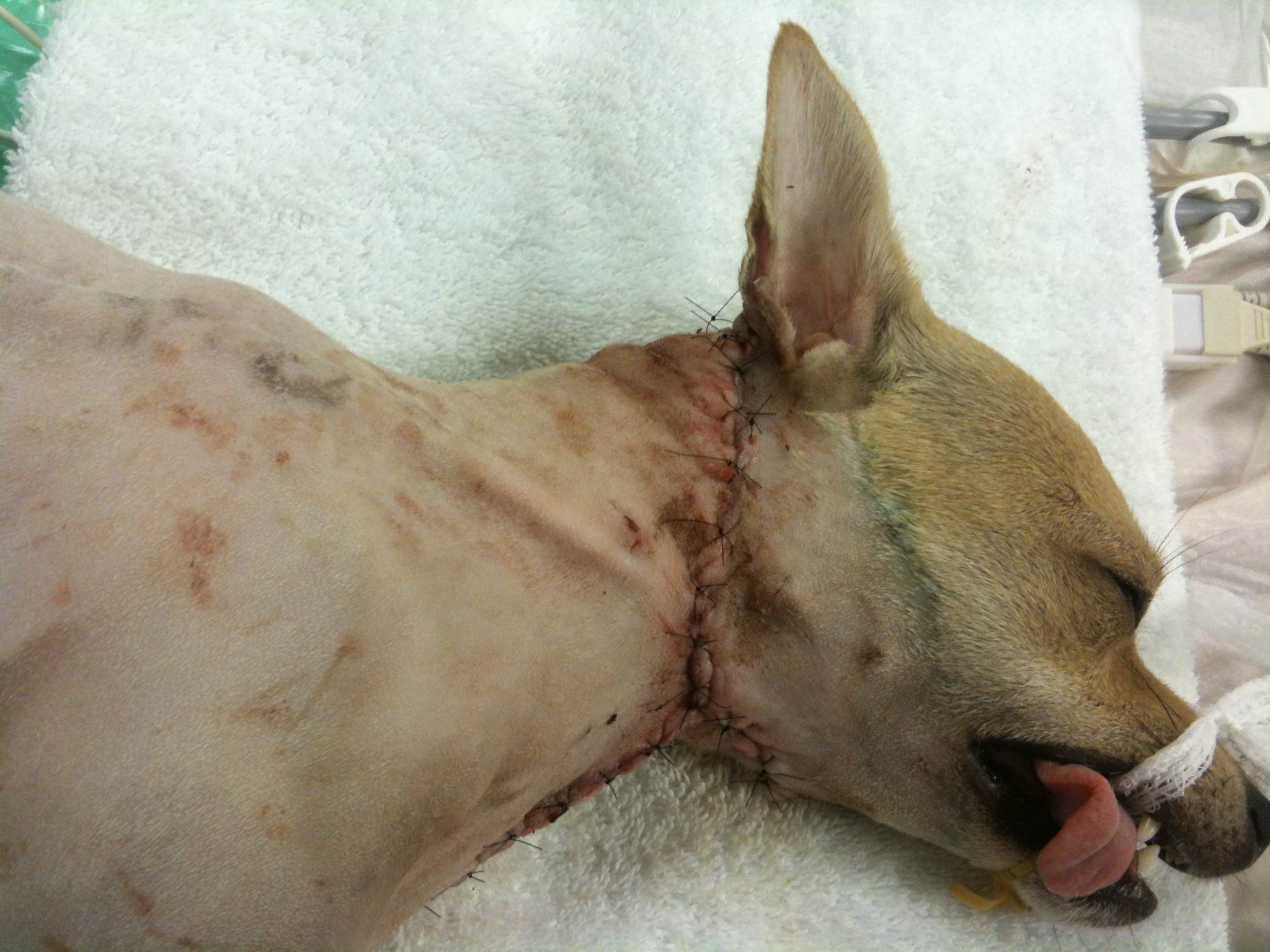
Our next dilemma was “how do we cover the exposed tissue”? In cases like this, we have a few options, which is beyond the scope of this post. I choose to use an advancement flap (skin freed up from a nearby location that is moved over the wound), which made the most sense due to the elasticity of the skin in this area. Below is his wound following surgery.

Advancement flap

Advancement flap

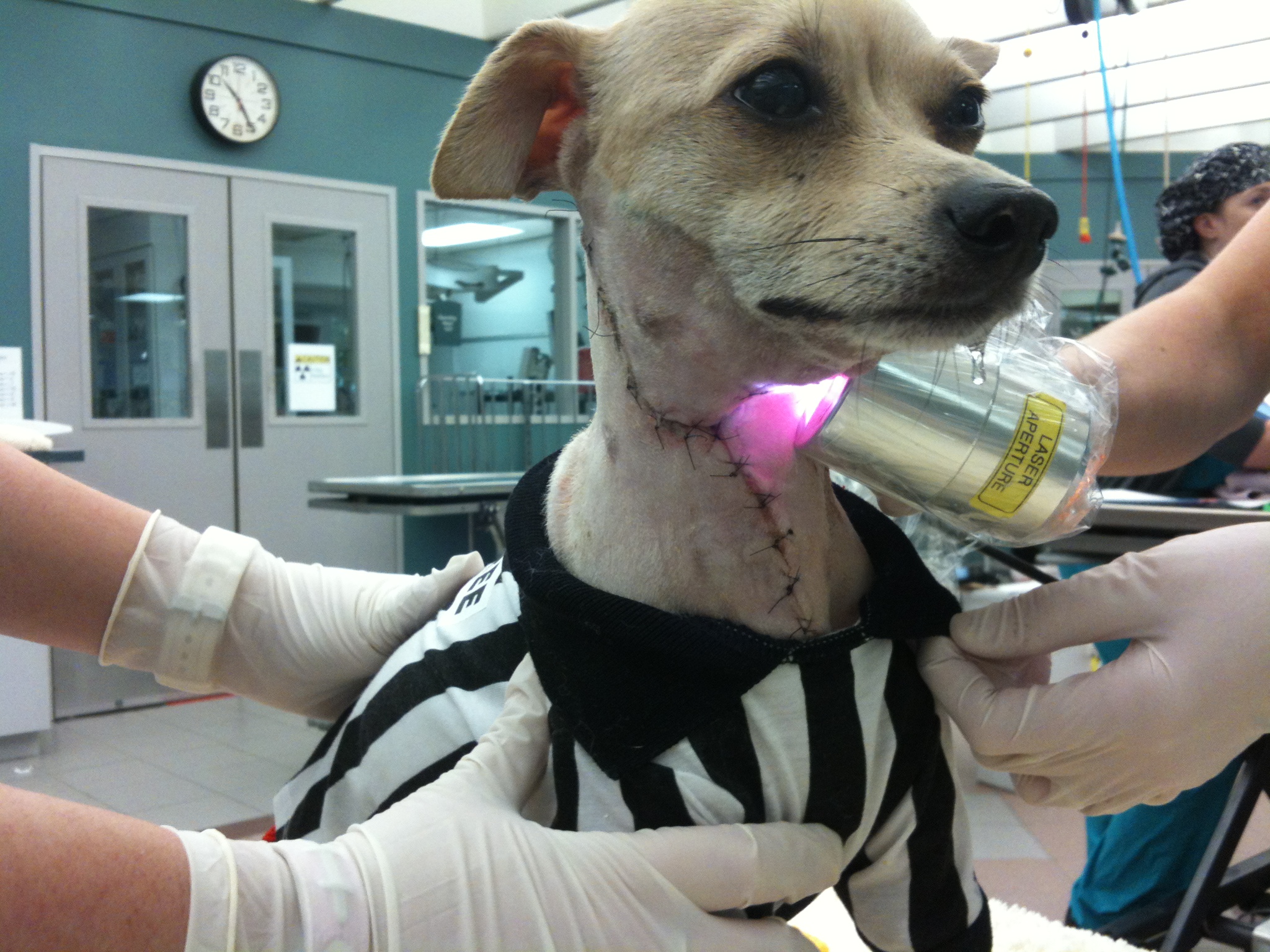
Following surgery we also utilized laser therapy to help promote uptake of the skin flap. This is Lucky in his referee uniform (it is close to Halloween) receiving his laser therapy.

Post-advancement flap therapy

Post-advancement flap therapy

Here is the finished product for Lucky!!! He overcame a lot of obstacles along the way!!

This is about 6 weeks after Lucky presented.

This is about 6 weeks after Lucky presented.