September 2014 Case of the Month – Meet Tido!!!

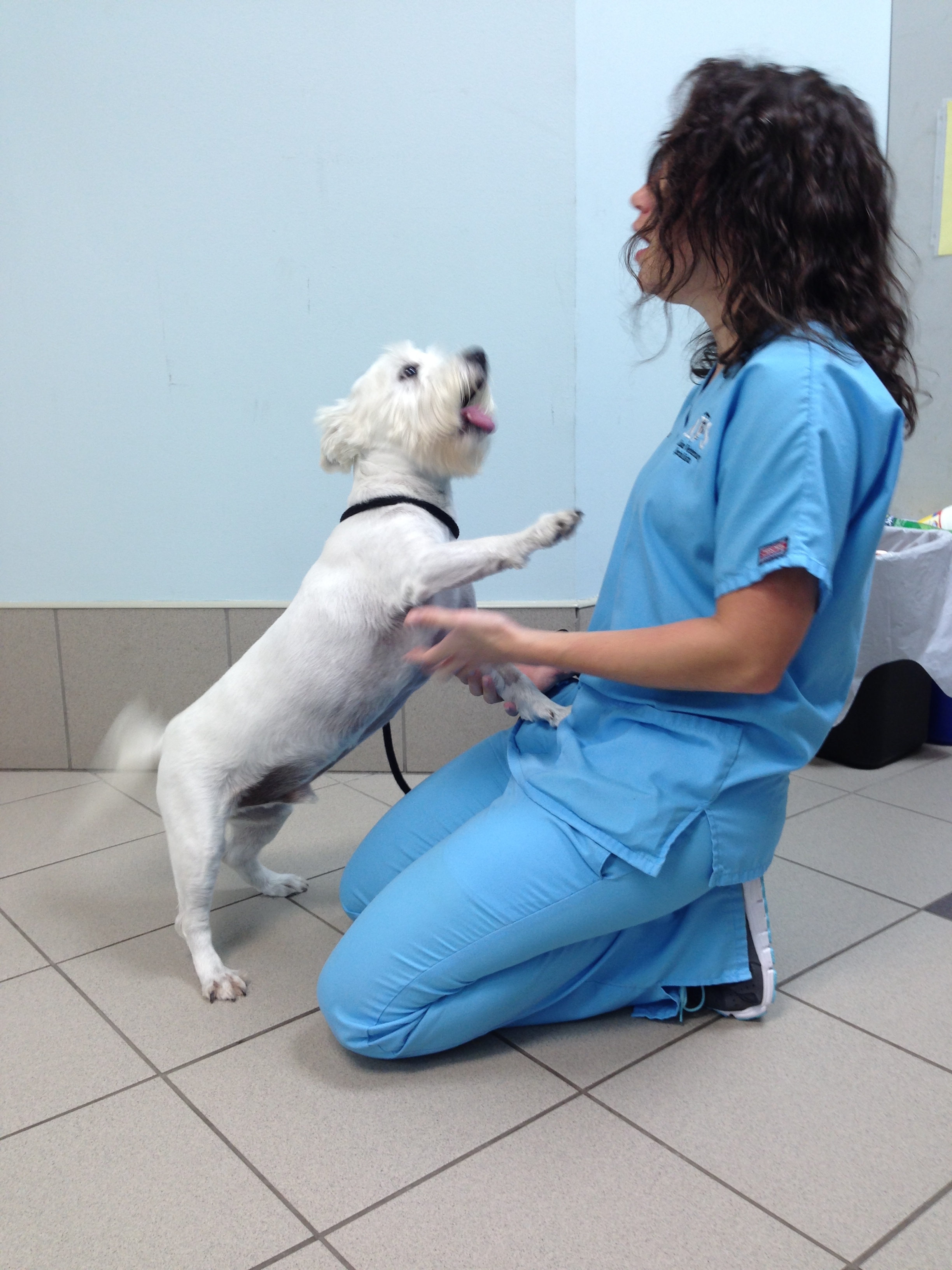
Tido two weeks after surgery!!! You can't keep him down!!!

Tido two weeks after surgery!!! You can’t keep him down!!!

Meet Tido!!! Tido is a 6 1/2 year old West Highland White Terrier that came to us (Affiliated Veterinary Specialists – Orange Park) for a lower esophageal foreign body. He started showing signs of intermittent vomiting and regurgitation after swallowing his rawhide bone. Unfortunately, it became lodged in the portion of the esophagus that goes through his chest, just past his heart. Usually we can use a scope camera and remove the object without any incisions. The piece of rawhide was wedged in this area and was unable to be moved, so surgery was his only option.
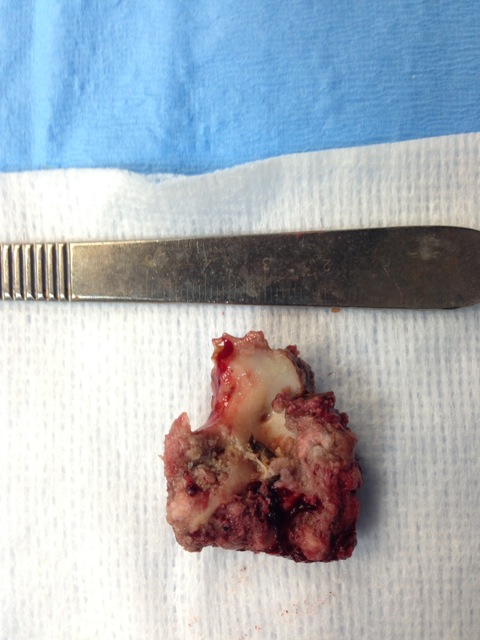
This was the piece of rawhide that was lodged in Tido's esophagus. It was nearly 5cm in length!!

This was the piece of rawhide that was lodged in Tido’s esophagus. It was nearly 4cm in length!!

An incision was made in the chest and the large piece of rawhide was found in the esophagus just past the heart. An incision was made into the esophagus and the rawhide was removed. Surgery on the esophagus is a very delicate surgery. In this area we have big vessels (aorta) above the esophagus and the vena cava below. Just in front of the esophagus is the heart. Nearby, there are very important nerves (vagus) that course over the esophagus. Also, the esophagus has a harder time healing versus other areas of the gastrointestinal tract with a higher chance of stricture (narrowing due to scar tissue) formation.
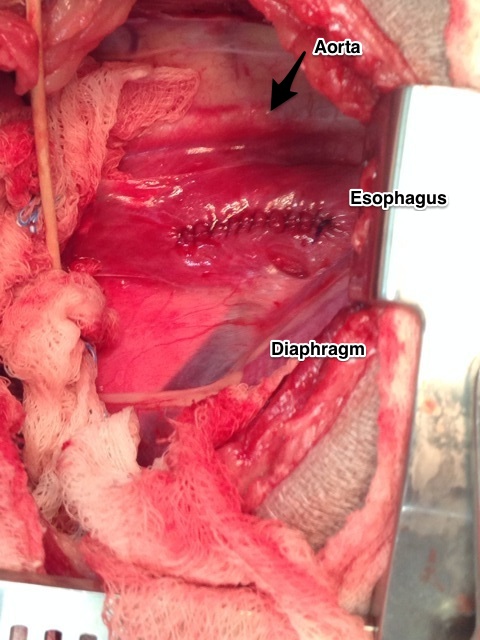
View of the esophagus just past the heart.

View of the esophagus just past the heart.

After the rawhide was removed, the esophagus was closed in two layers and then a Vetrix Extracellular Matrix (ECM) sheet was placed. This will aid in healing by providing a scaffold for the tissue to heal and incorporate the bodies own stem cells to infiltrate the area. After the esophagus was closed, Tido’s chest was closed in a standard fashion.
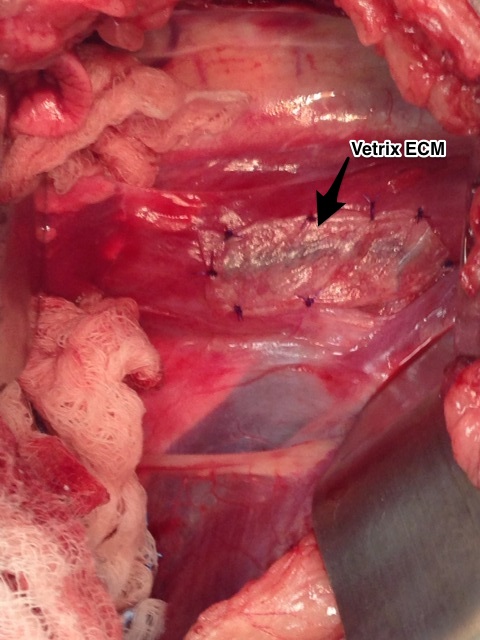
Vetrix Extracellular Matrix placement over the esophageal incision.

Vetrix Extracellular Matrix placement over the esophageal incision.

Tido made an excellent recovery!!! He has been on a soft diet and no rawhides for him!!! In four weeks he should be able to resume his normal activity. At his two week recheck, you could never tell he had surgery. Way to go Tido!!!
Happy Holidays

I want to take a moment to thank everyone for their continued interest and support of this blog. Your continued support has meant a lot to me and allowed me to continue to post various topics. I want to wish everyone Happy Holidays during this joyous time of the year! I wish you all the best in the New Year too! Keep your pets safe throughout this time, but definitely spoil them (we want them to ring in the New Years without any ailments)! Please continue to follow this blog!

Seasons Greetings!!

Kevin

Treatment for an Intestinal Obstruction

Sorry about the nearly one month lapse in writing. I think it would be good to finish the topic on intestinal obstructions. The biggest question to be asked is, once the diagnosis is made – how do we correct the issue. The answer is one of three: 1. endoscopic removal of gastric foreign material, 2. surgical removal by an abdominal exploratory (or laparoscopy – only if a focal obstruction), and 3. hospitalization and fluids, if and only if , the foreign material is diagnosed as being in the large intestine/colon.

Generally, surgical explore of the abdomen and removal via a gastrotomy, enterotomy, or intestinal resection and anastomosis is recommended. Rather than go into the technical aspects of the surgeries, it would be better to put the emphasis of the importance of early detection and treatment of an intestinal obstruction, especially a complete obstruction. The biggest worry is both where in the gastrointestinal tract and to what extent did the material cause damage to the intestine. This can range from irritation and inflammation to perforation and necrosis (death) of the affected intestine. Early intervention is key in trying to reduce the risk of extensive damage. The more aggressive the procedure required increases post-operative risk to the patient.

Most patients will do well with surgery and recover uneventfully. Standard enterotomies and resection/anastomosis have a 10-15% complication rate when performed according to the literature. The most concerning complication is termed dehiscence (leaking of the intestinal suture line) and require another surgery to repair the area. Unfortunately, with more surgery required, the complication rate increases.

The best word of advice would be to attempt to identify possible foreign bodies and remove them them your pets reach. Some examples would be torn pieces of toys, squeakers from toys that have been removed, string/fishing line from cats, etc. However, if you do find your pets have the common signs – seek veterinary help right away.

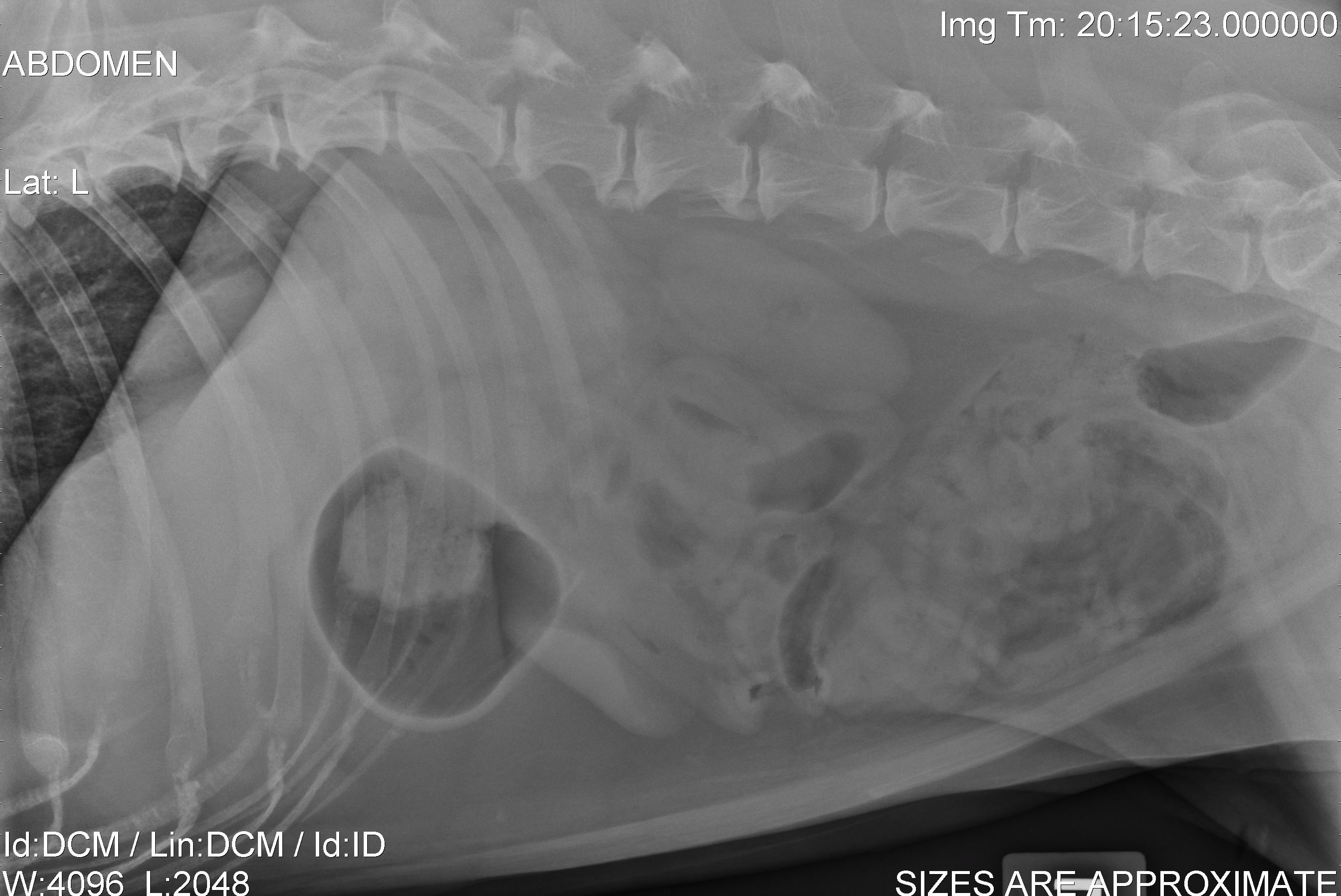
An x-ray of a foreign body both in the stomach and within the intestines.

Common Signs with Intestinal Obstructions

Welcome back. This shouldn’t take too long, but let’s review some of the more common signs seen with intestinal obstructions. The most common sign would be vomiting and generally not a one time occurrence. This will usually be profuse vomiting (but can vary with every patient). Other signs to look for is anorexia (not wanting to eat), lethargy, and abdominal pain. As with any type of foreign body the gastrointestinal tract can become perforated and significantly worse signs can become evident. Whenever an intestinal foreign body is suspected immediate veterinary care (whether your primary veterinarian or an emergency clinic) is highly recommended. Generally these signs will occur very acutely (all of a sudden) once the object begins to obstruct the intestine. We don’t always know what our dogs get into, especially if they are left unattended or go outside in the back and unsupervised. It seems like many owner don’t know what there pet got into and swallowed.

During the initial evaluation, your veterinarian may recommend some diagnostic tests to help support the diagnosis of an intestinal foreign body and justify surgery. Most of the time the physical exam will show, dehydration (high heart rate, dry mucus membranes, etc), evidence of vomiting, pain on abdominal palpation, fever (if perforated intestines) and other various signs. Some dogs when presented early show few signs and are very stable, other dogs show very severe signs and may be very unstable and require aggressive supportive care including aggressive fluid management and other treatments.

The standard diagnostics after initial triage (physical exam, blood pressure, etc) typically include abdominal radiographs (x-rays), complete blood work, possible chest radiographs (if aspiration suspect or in the geriatric dog) and possible abdominal ultrasound if the radiographs are non-diagnostic. Some may also recommend contrast radiographs with barium contrast in an attempt to highlight the foreign body.

Once a presumptive diagnosis is made and the patient is deemed stable surgery generally is the next step. If the foreign body is only in the stomach, endoscopy may be performed succesfully to remove the object.

Intestinal Obstructions

Hello all!!! I hope everyone is well!!! It has been a busy past few weeks. I recently was in Mexico lecturing, which was very exciting, my first international lecture series. Everyone was great in Mexico, very hospitable, I hope to be invited in the future. The next few weeks will prove to be busy as well – we will see how things go – stay tuned for updates.

I was trying to think of topics to share that might be beneficial for both owner and professional, and thought I would share a little about gastrointestinal obstructions – namely foreign bodies/materials. As a general surgeon, intestinal foreign bodies and obstructions are a common reason to go to surgery. Countless times per week we are faced with the decision of surgery in intestinal obstructions. While eating a foreign body is a major way of causing an obstruction, there can be other reasons as well such as cancer, etc. We will stick to foreign body obstructions in this blog.

Defining the terms: Foreign body refers to any material (ingested, in this case) that is foreign to the body. We are referring to objects swallowed by an animal and can range from fabric, stick, coins, tennis balls, rocks, etc. When an animal ingests an object there are three possible outcomes: 1. passing the object and excreting it in the feces, 2. becoming partially lodges in the stomach or intestines and partially blocking the normal flow of contents, and 3. becoming lodged in the stomach (pylorus) and/or intestines and causing a complete obstruction, not allowing any gastrointestinal contents to pass. These can also occur in the esophagus too.

Now that we got that out of the way, we will start talking about common signs you may see with your pet when they swallow a foreign object. Stay tuned!!!