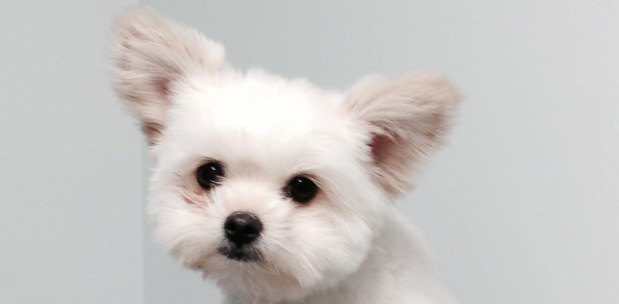
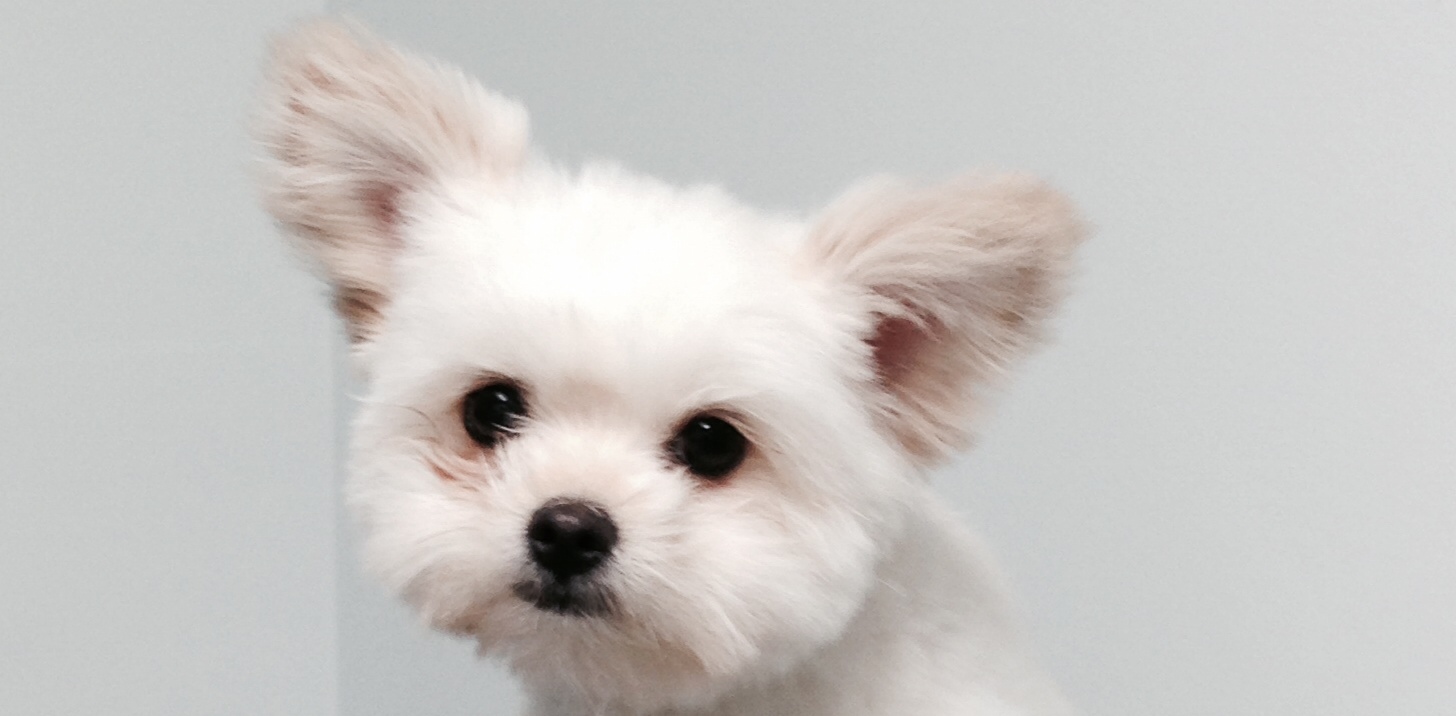
Happy New Year, 2015!!! Meet Mieka, she has made the January 2015 Case of the Month (COTM). Read on to hear about her story!!!
Mieka was selected for the COTM and rightfully so, her story began about a year ago and her total recovery took about 6 months. She is a sweet Pomeranian with a vivacious personality, as you will see in the videos below. She can be quite demanding, but with all that she has been through, we will let it slide.
Mieka presented when she was 7 months of age. She was adopted when she was 2-3 months old and according to her owners never really walked normally. As she developed and got older, her walking declined to the point that she would not place normal weight on the hind limbs and would walk with an arched back and her hind legs crossed. Below is a video of her at the initial presentation.
Based on the examination and x-rays taken, her diagnosis was complex with severe expression of congenital/hereditary diseases affecting both her stifles/knees, patellas (knee caps), and hips (hip dysplasia and bilateral hip luxation – out of socket).
It is fairly rare to see these conditions, this severe in such a young dog. We see knee cap/patella issues very commonly in small breed dogs – but not this severe. She has what is called medial patella luxation (Grade 4/4), this is where the knee cap slides inward and in her case both were permanently fixed in the wrong position. Due to the severity of the knee caps, the attachments points on the tibia were also malformed as well as the bottom part of the femur. As for her hips, she had severe hip dysplasia to the point where the hips would “pop” out of joint during motion. Here are some pictures and x-rays that show some of the deformities.
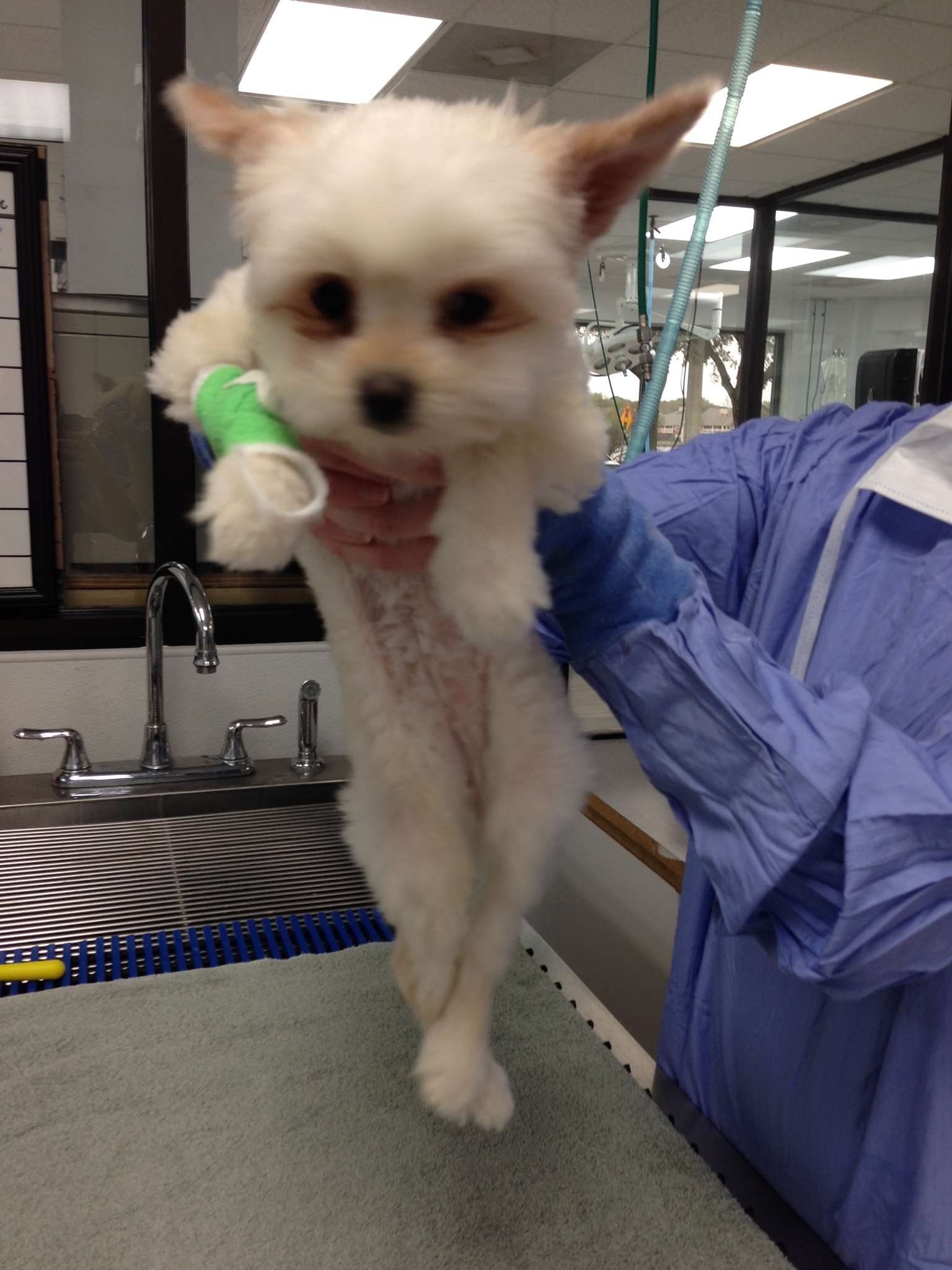
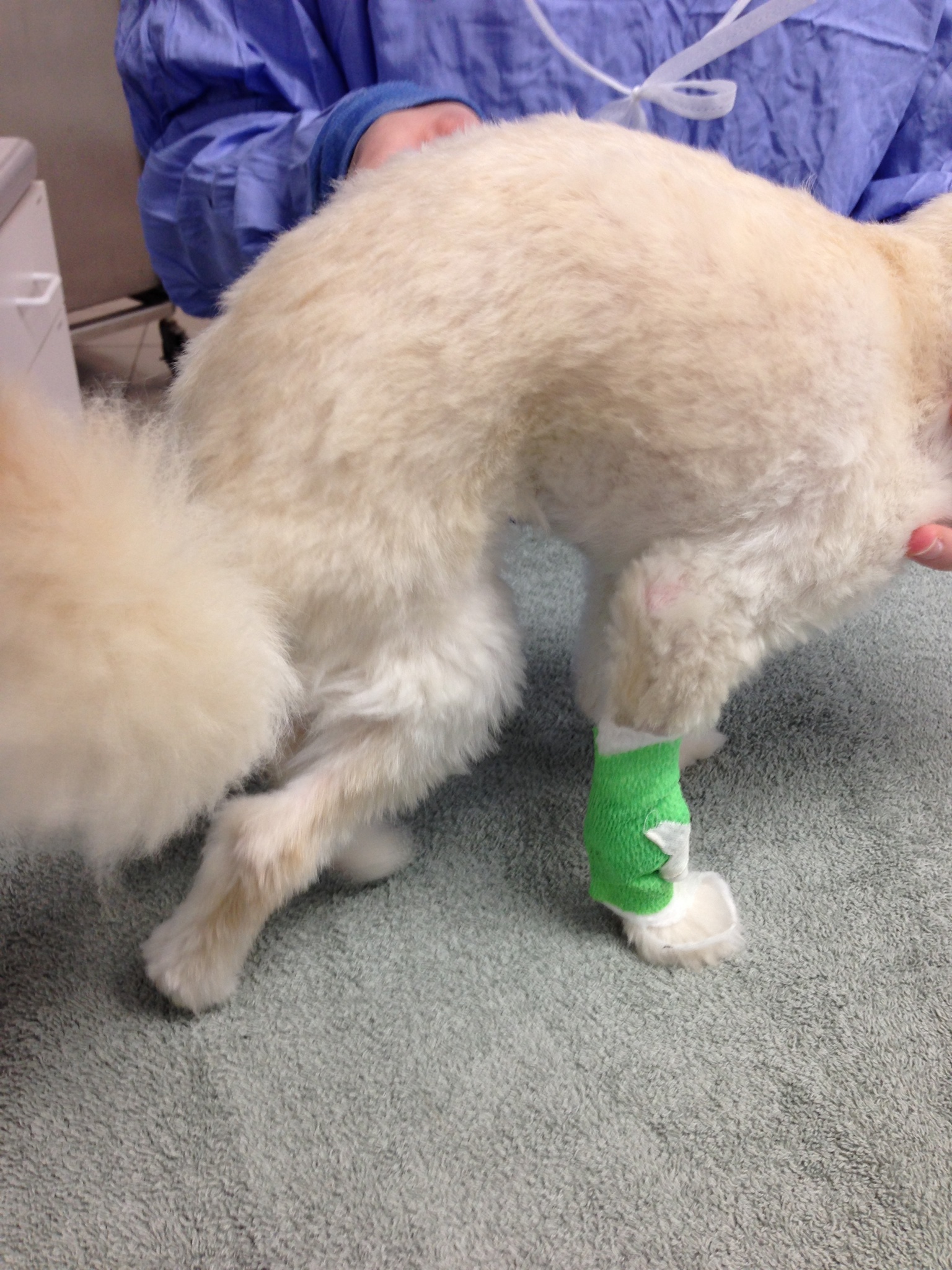
Note the hind limb deformities and the crossing over of her legs.
Note the positioning of the hind legs.

Note that her patellas are located inward and that on this x-ray the left hip is out of joint.
Not to bore with all the details of surgery, but four surgeries were planned for Mieka. We decided to start with the left side, however both were bad. We corrected the alignment in her knee by correcting the deformities in the tibia and the femur and then secured the patella. In order to correct the alignment, we had to cut the bones (tibia and femur) and adjusted with a plate and screws. Once she began to heal from that surgery, we addressed the hip by performing a femoral head ostectomy (removal of the femoral head).
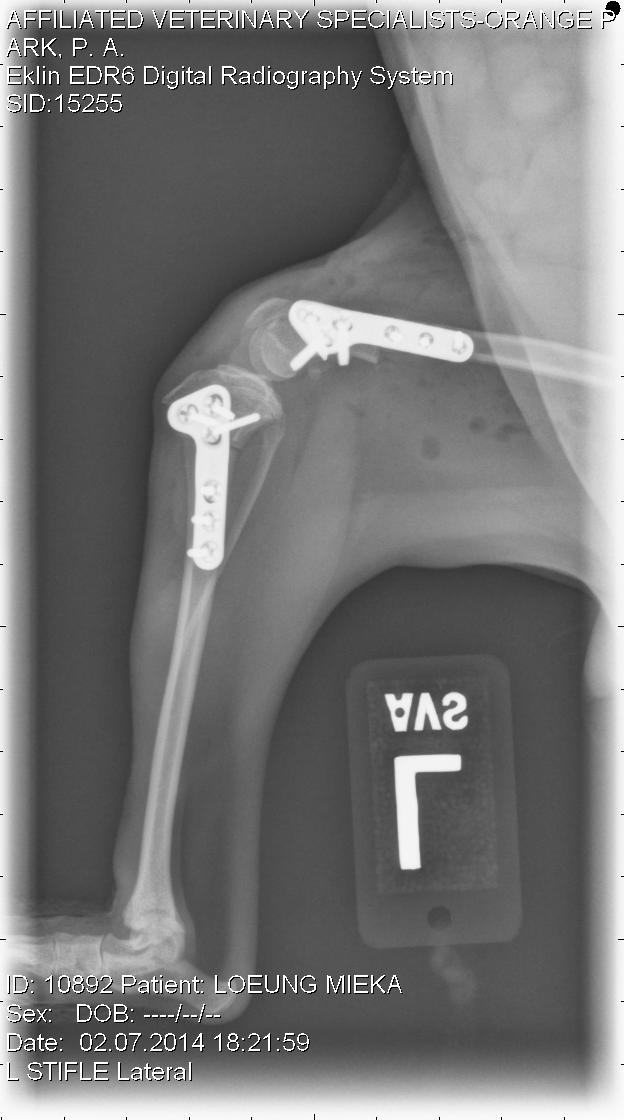
Note the more normal appearance of the tibia, femur and patella.
With the assistance of the physical therapy department and the dedication of her owners, she rapidly began to improved. As soon as she was strong enough on the left side, the right side was tackled. The same procedures were performed on the right side as well as intense physical therapy following surgery. Below is Mieka about two months after the last surgery. You can see how demanding she can be as she makes herself known. We are thrilled to see her do well.
The shortness of this post underscores the journey Mieka endured. She has definitely earned a case of the month distinction and more. Way to go Mieka!!!
 A Veterinarian's Perspective