Happy Holidays

I want to take a moment to thank everyone for their continued interest and support of this blog. Your continued support has meant a lot to me and allowed me to continue to post various topics. I want to wish everyone Happy Holidays during this joyous time of the year! I wish you all the best in the New Year too! Keep your pets safe throughout this time, but definitely spoil them (we want them to ring in the New Years without any ailments)! Please continue to follow this blog!

Seasons Greetings!!

Kevin

Minimally Invasive Surgery – Thoracoscopy

Thoracoscopy is the use of a rigid scope to evaluate the thoracic cavity. Typically this is performed in either dorsal recumbency (on their back) or lateral recumbency (on side) and involves an average of 3 portals. These patients typically experience a marked decrease in pain post-operatively when compared to a lateral thoracotomy or median sternotomy (open chest procedures).

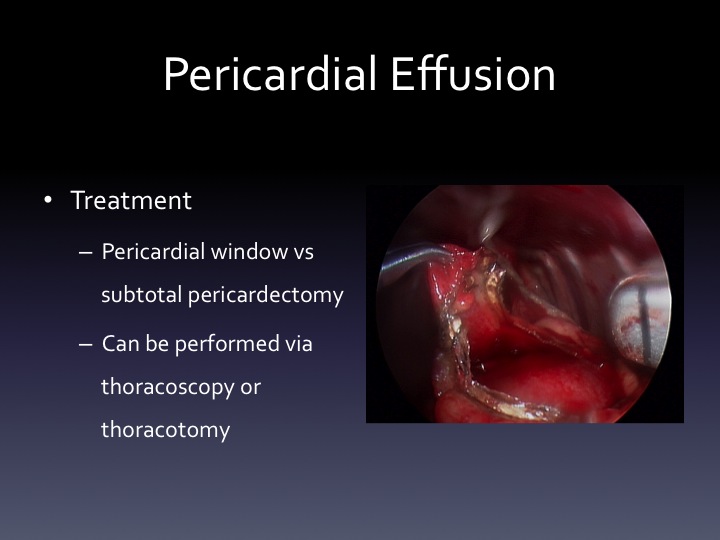
Indications for thoracoscopy are as follows (not limited to): exploration of the thoracic cavity, pleural effusion of unknown origin, idiopathic pericardial effusion, lung resection, vascular ring anomaly, biopsies of the chest cavity, lymph node biopsy, pyothorax evaluation, etc. When appropriate, the major advantage is patient comfort, decreased morbidity, and in many cases better visualization. One of the most common reasons for thoracoscopy is pericardial effusion. This can be idiopathic, neoplastic or inflammatory. Therapy for pericardial effusions could include a pericardial window which can be done via thoracoscopy. Common risks with this procedure are as follows: herniation of the heart, fibrosis of the window, and continued hemorrhage.

Results of thoracoscopic pericardial windows are usually very successful when performed in the appropriate patient. It can provide long-term resolution in patients with idiopathic effusion and inflammatory disease. Quality of life can be improved in cases with cancer.

Overall, thoracoscopic procedures are increasing in popularity. The thought of being able to address surgical problems with minimal incision versus using large invasive incisions is very attractive. Please feel free to discuss these options with your veterinarian or veterinary surgeon.

Pericardial window being performed with Ligasure.

Previous article regarding prophylactic gastropexy and ovariohysterectomy!

Minimally Invasive Spay and Gastropexy!

More and more we hear about less invasive procedures for man, which begs the question: What can we do for our best friend? As human medicine and surgery becomes more advanced, so does surgery for our pets. Laparoscopy, which is the introduction of cameras and instruments via very small incisions into the abdomen, is one of those advances and can be used for everyday procedure such as a spay.

                Spaying (ovariectomy or ovariohysterectomy) your pet is an important part of your female dog’s (and cat’s) preventative health care plan. Its benefits include:  decreased risk of mammary cancer and uterine/ovarian cancers, infection of the uterus (which can be life threatening), etc. Spaying is recommended in any pet not being used in a breeding program.

                We typically think of a spay as a procedure that includes a larger incision on your dogs abdomen where the abdomen is opened and closed. Not anymore! We now have the ability to perform it as a laparoscopic procedure. This involves two small incisions: one that is 0.5 cm in length and the second that is 1 cm in length. All the work is performed through these two small incisions! Post-operative pain is greatly reduced and recovery time is very short, as your pet would go home the same day. An additional benefit is that there is not a larger incision to be concerned with and have to monitor.

                Another laparoscopic procedure that is becoming more commonplace is the laparoscopic-assisted gastropexy. All one has to do is watch movies or have some experience with large breed dogs to have heard about gastric dilatation and volvulus (GDV), which is the name given when a dogs stomach becomes bloated and twists on itself. This situation is a very serious condition and can be very life-threatening. It must be diagnosed and treated very quickly (hours). This condition is more common to occur in larger, deep-chested dog breeds (i.e Great Danes, Mastiffs, etc), but has been seen in many dog breeds. Unfortunately, we do not know what causes this condition; however one way to prevent it is by performing a gastropexy, which is a procedure that “tacks” the stomach to the body wall.

                A prophylactic gastropexy used to require a large abdominal incision, but not anymore. With the assistance of laparoscopy, we have been able to greatly reduce the size of the incision, decrease post-operative pain, and decrease the pet’s recovery time both in the hospital and at home. For this procedure there is a small (0.5 cm) incision made into the abdomen for the camera and a 2-3 inch incision just behind the last rib on the dog’s right side for the gastropexy – and that is it! This procedure has been shown to greatly reduce the chance of having a GDV in the future. Also, if your dog is not only a predisposed breed and a female, both a spay and gastropexy can be combined into one procedure.

                There are certainly other procedures that can be performed with these minimally invasive techniques. Veterinary medicine continues to advance and the use of laparoscopy is endless. We can use it for removing retained testicles, certain abdominal masses, gall bladder removal, etc. Also a growing field is the use of cameras and minimally invasive procedures within the chest (thoracoscopy). All these procedures are aimed at providing cutting edge techniques for your pet in order to improve your pet’s health, strengthening the bond between you and your best friend.
Minimally Invasive Surgery – Laparoscopy

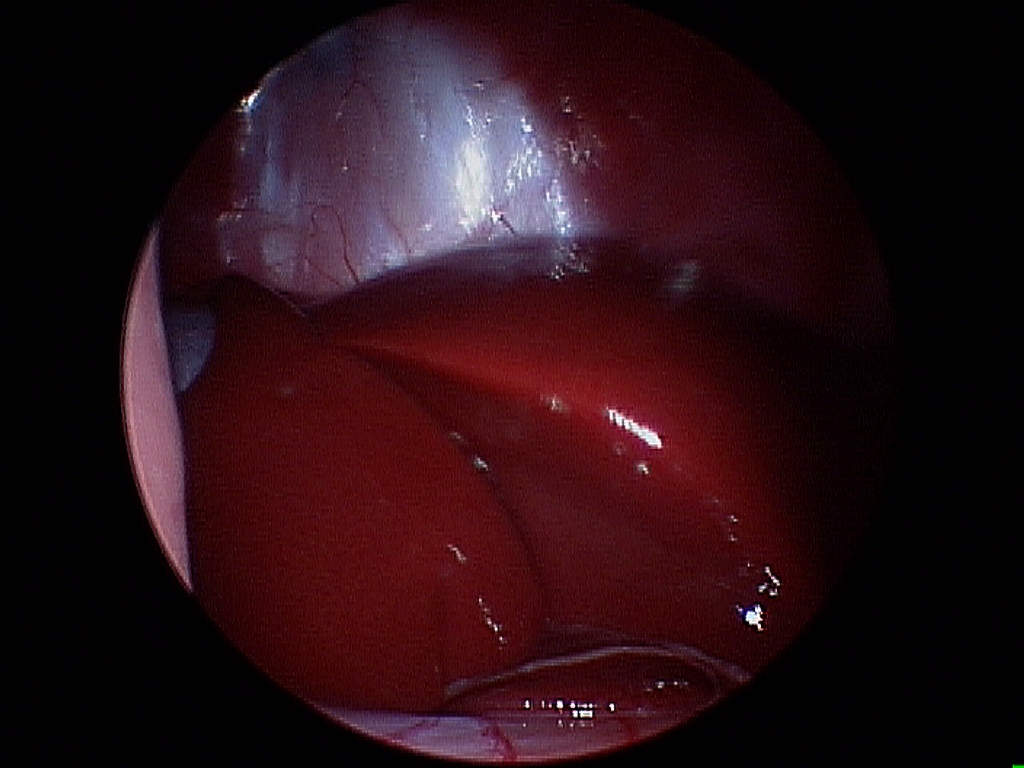
View of the liver and diaphragm laparoscopically

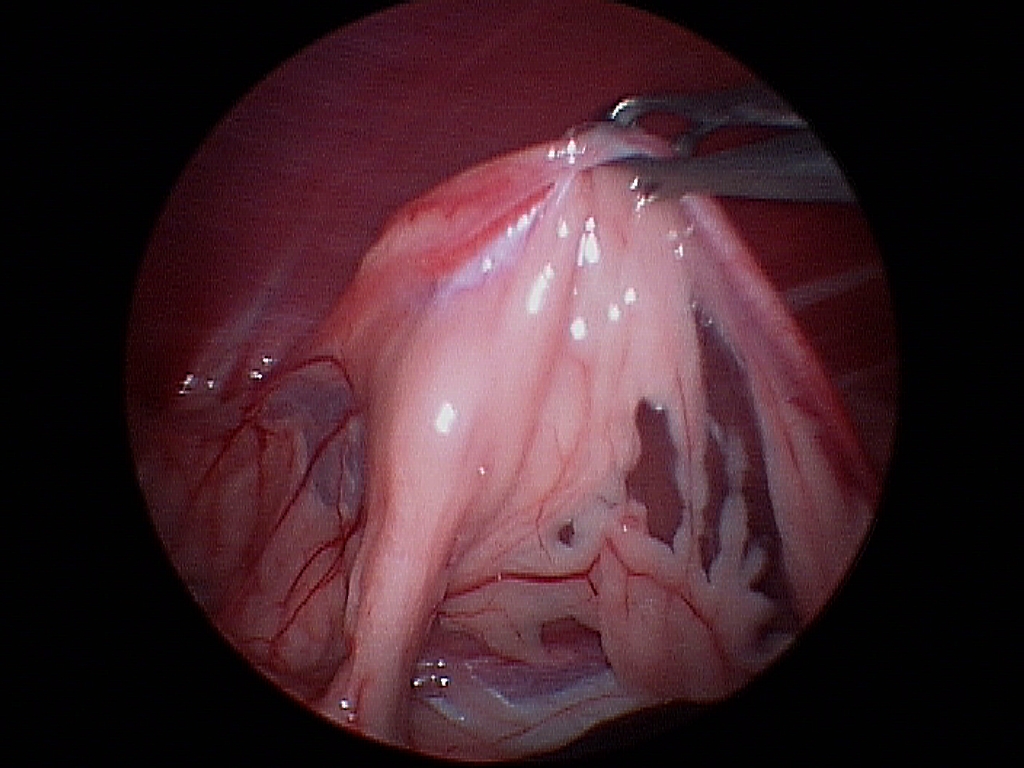
View of the right ovary during a standard laparoscopic spay.

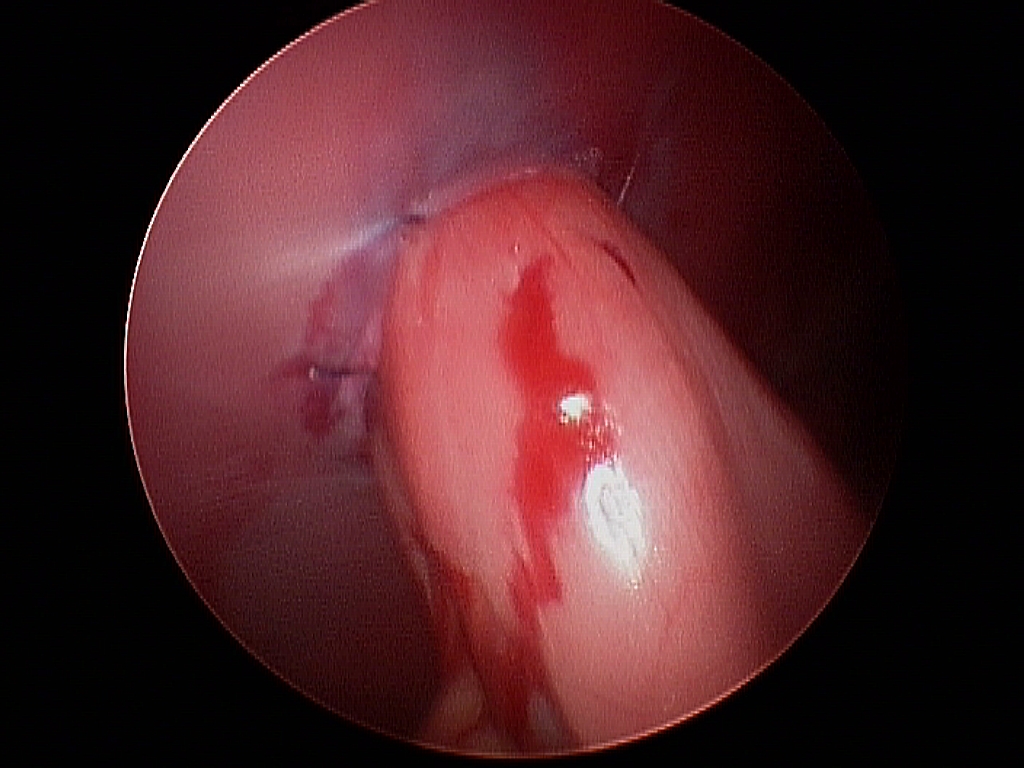
Abdominal view of a laparoscopic gastropexy.

What is laparoscopy? This is an advanced surgical technique that utilizes cameras and instruments that are introduced into the abdomen via small incisions (portals). This type of surgical procedure is becoming more and more common in human medicine. It is not uncommon to hear about gallbladder removals, “lap band” procedures and many other operations being performed this way. It is really becoming the standard of care – so why not for our pets? Certainly the technology is there! The more and more we get comfortable with these techniques, the more we will be able to do.

The basic concept of laparoscopy is to make portals that allow the introduction of a camera and instruments. The actual surgical work is done within the abdomen by visualizing it on a video monitor. Before attempting laparoscopic surgeries, the surgeon needs to be comfortable with performing the surgery in an open approach, because there are times, when laparoscopy is not the best approach and the surgery needs to be converted.

What are the benefits of laparoscopy? The most notable benefits are patient comfort, soft tissue damage (termed morbidity), excellent visualization (images are magnified), shorter hospital stays. All these combined form a convincing argument for laparoscopic surgery.

One of the most common procedures performed is the ovariohysterectomy (spay). This can be performed from 0.5 cm and 1.0 cm incisions. This is a very quick procedure and allows the surgeon complete access and visualization of the ovaries and uterus. Specialized sealing devices allow the surgeon to remove the full uterus and ovaries with minimal bleeding and incisions. Another benefit is that with the small size of the incisions, there is low risk of herniation of abdominal contents, and the patient can return to activity in about a week.

The spay is many times combined with a prophylactic gastropexy in the larger breed dogs. This is a procedure that allows the stomach to be attached to the body wall to prevent deadly twisting of the stomach. This is a very effective procedure. For more information, please visit the previous blogs entitled GDV.

Other more complex procedures include multiple biopsies, adrenalectomy, gallbladder removal, liver mass resection, cryptorchid testicle removal, etc. As more experience is gained with laparoscopy the more we can do. If you have questions about laparoscopy feel free to comment or ask your veterinarian and veterinary surgeon.

Minimally Invasive Surgery – 1

I hope everyone is having a great weekend! The next series of topics is join got focus on minimally invasive procedures. This is of particular interest of mine. There are multiple implications of this terms, I am going to focus on laparascopy, thoracoscopy and arthroscopy.

As medicine advances in both the human and veterinary world, we are starting to do more with less. What I mean is that through smaller incisions and better technology we address more and more surgical problems. The benefit of this is shorter hospital stays, decreased complication rte, decreased infection rates, and decreased soft tissue trauma and post-surgical pain. We are very lucky to have all this new technology available to us.

Here is a definition of the terms:

Laparascopy: Abdominal surgery being performed with a scope/camera via a small portal incision. Multiple other portals are made to introduce instruments. All procedures are performed within the abdominal cavity. Laparoscopic-assisted means that part of the procedure is done with cameras within the body cavity and part is done via small incisions outside of the abdomen.

Thoracoscopy: Same definition as above, however this pertains to the chest or thorax. This is a very useful modality and is used to treat various cardiac, pulmonary (lung) and esophageal problems.

Arthroscopy: Same definition as above, however this is performed on the joints. This is a very common use in veterinary medicine and is thought to be the gold standard in joint evaluation. The most common joints evaluated through this are the elbows, shoulders and knees, however the wrists (carpi), ankles (hocks/tarsi), and hips can be evaluated. Just think, if you have an ACL injury, it is very common for you to have your knee scoped, why not your best friend?