August 2013 Case of the Month

TO VIEW THE VIDEO OF THE STICK REMOVAL, PLEASE VISIT THE FACEBOOK PAGE: Kevin Benjamino DVM, DACVS and like the page while you are at it!!

This case certainly deserves to be designated as a case of the month! I have uploaded some images and video. As for the video, as a fair warning, it may not be suitable for children due to the surgical images.

Luke is a 2 1/2 year old American Staffordshire Terrier who presented to the surgery service at Affiliated Veterinary Specialists (Orange Park) for evaluation of a non-healing wound over his left side, near his last rib. The owners and family veterinarian had been managing the non-healing wound for the past 6 months with different antibiotics and even had a surgery to try and identify a reason or source of the the wound. Outside of the non-healing wound, Luke was a very active dog and nothing could slow him down. the rest of his physical exam (other than the wound) was normal.

Part of Luke’s history is that he is a wild boy and loved to chase sticks and run through the woods, etc. One of the top reasons why some dogs develop non-healing wounds is due to foreign material that can migrate or move around the body to different areas. Some dogs are responsive to antibiotics which keep secondary infections controlled, however once the antibiotic is stopped, the wound comes back (which is what has happened with Luke). This had us suspicious that we could be dealing with foreign material that could be the cause for Luke’s signs. Other causes for a non-healing wound would be resistant infections and/or fungal infection, cancer, etc.

The next step for Luke was to perform some basic diagnostics including some radiographs (x-rays) of both his thorax (chest) and abdomen to rule out anything obvious or a communication from the outside into these body cavities. The x-rays were relatively unremarkable. With Luke under anesthesia just prior to surgery, a contrast study called a fistulogram was performed. A foley catheter was introduced into the non-healing wound and contrast fluid was injected. This fluid will show up white on x-rays. On this test, we were able to see some uptake of the contrast around an object in between the 11th and 12th rib. This test was very useful in showing us where we needed to focus our attention surgically.
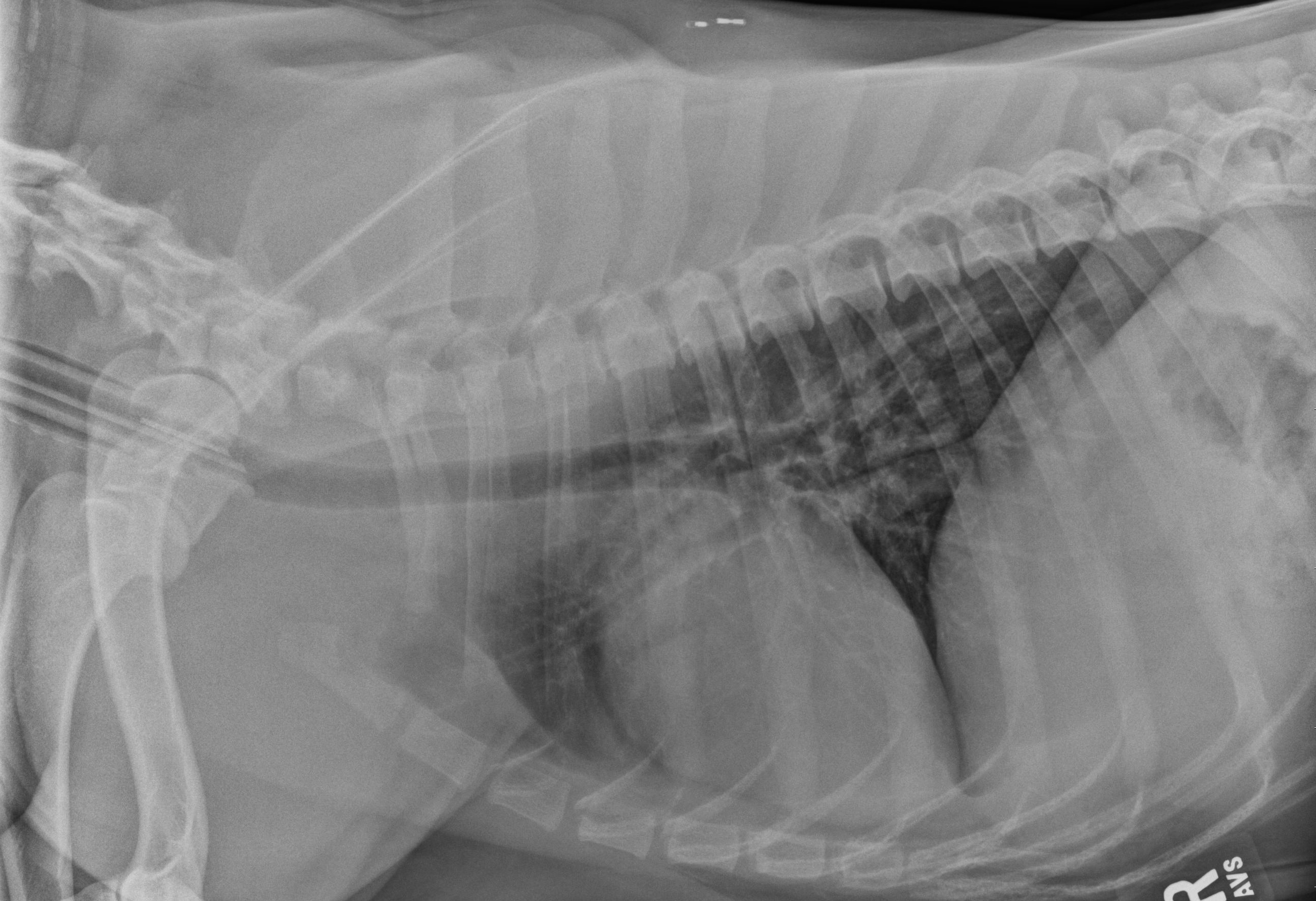
Plain chest radiograph (x-ray)
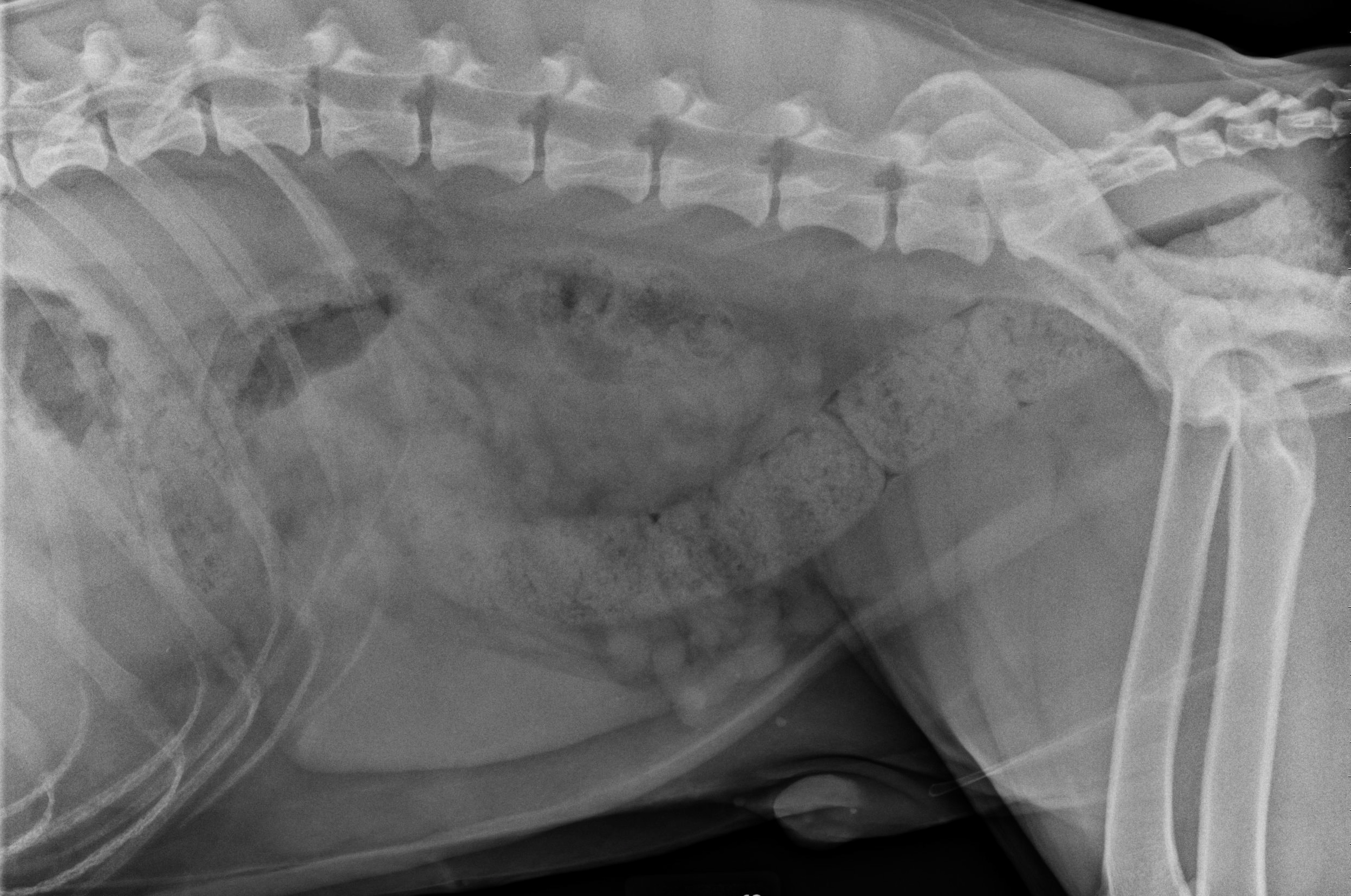
Plain chest radiograph (x-ray)

Plain abdominal x-ray.
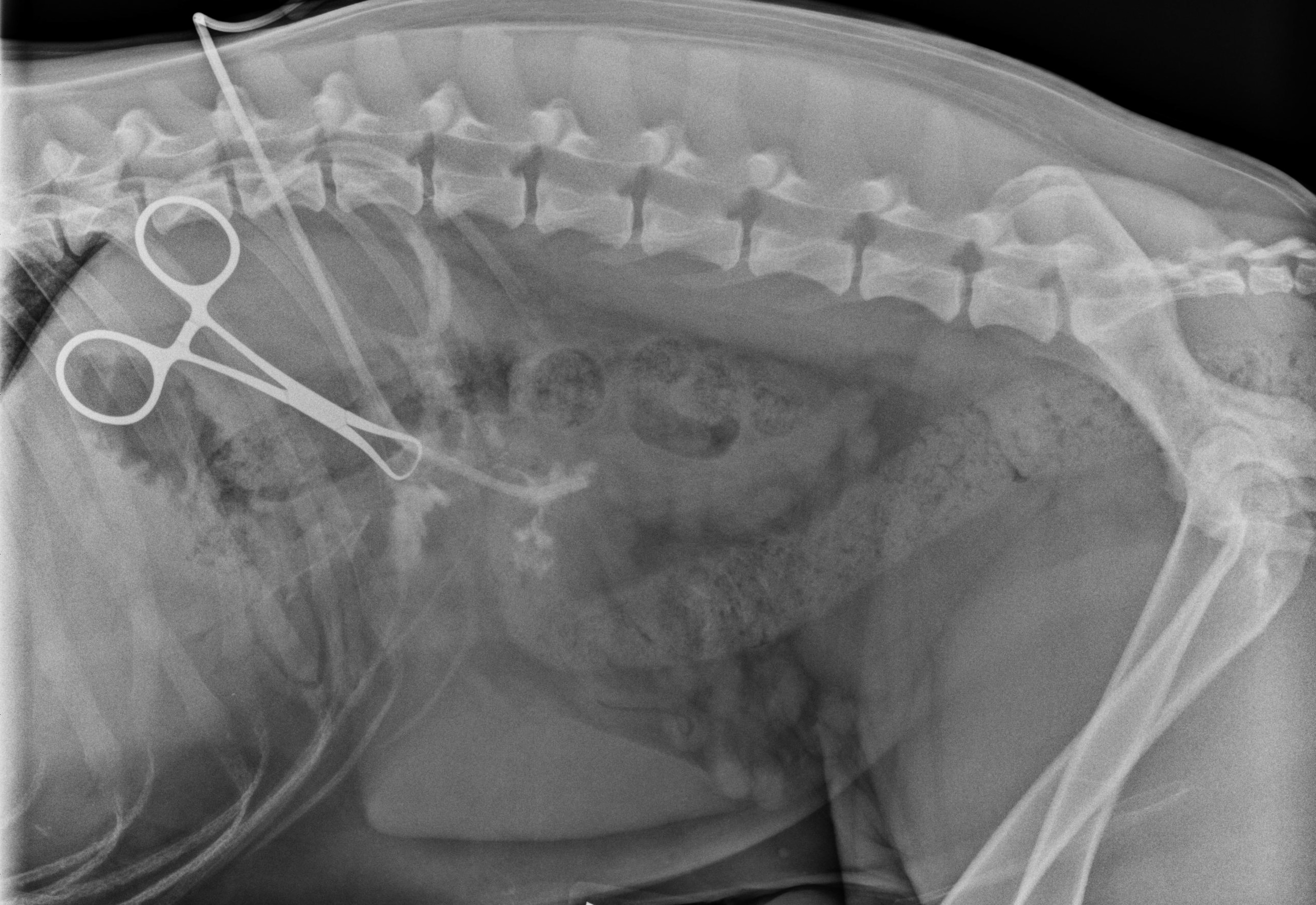
Plain abdominal x-ray.

Fistulogram image: Notice in front of the clamp there are small white lines outlining the stick.

Fistulogram image: Notice in front of the clamp there are small white lines outlining the stick.

The video pretty much says it all! On dissection in between the 11th and 12th rib (deep to the rib) we found a stick that was lodged there and it was successfully removed. This was a very gratifying surgery. You may be asking, were was the stick – which is an excellent question, did it come from the abdomen, chest, etc? If there was direct communication within the abdomen, then we would be concerned with a septic (infection) peritonitis and likewise if it were within the chest cavity we would be concerned with a pyothorax (infection in the chest cavity). To help us determine this, another foley catheter was introduced (after copious flushing) into the space that was occupied by the stick and everything else was closed around the catheter. Contrast was injected into the catheter and a x-ray taken which showed the contrast in the stomach and not in the body cavity. Sequential x-rays were taken which showed the contrast in the gastrointestinal tract and not outside.

Amazingly, I believe Luke had swallowed the stick at some point (longer than 6 months ago) and the stick had migrated from the stomach wall to the body wall. Most likely the stomach had been tacked or pinned to the body wall creating what is called a stoma, sealing the stomach to the body wall. Luke is quite a remarkable dog for withstanding this condition. On multiple rechecks since surgery, he has been doing very well – like nothing every happened. He is one for the record books!!!
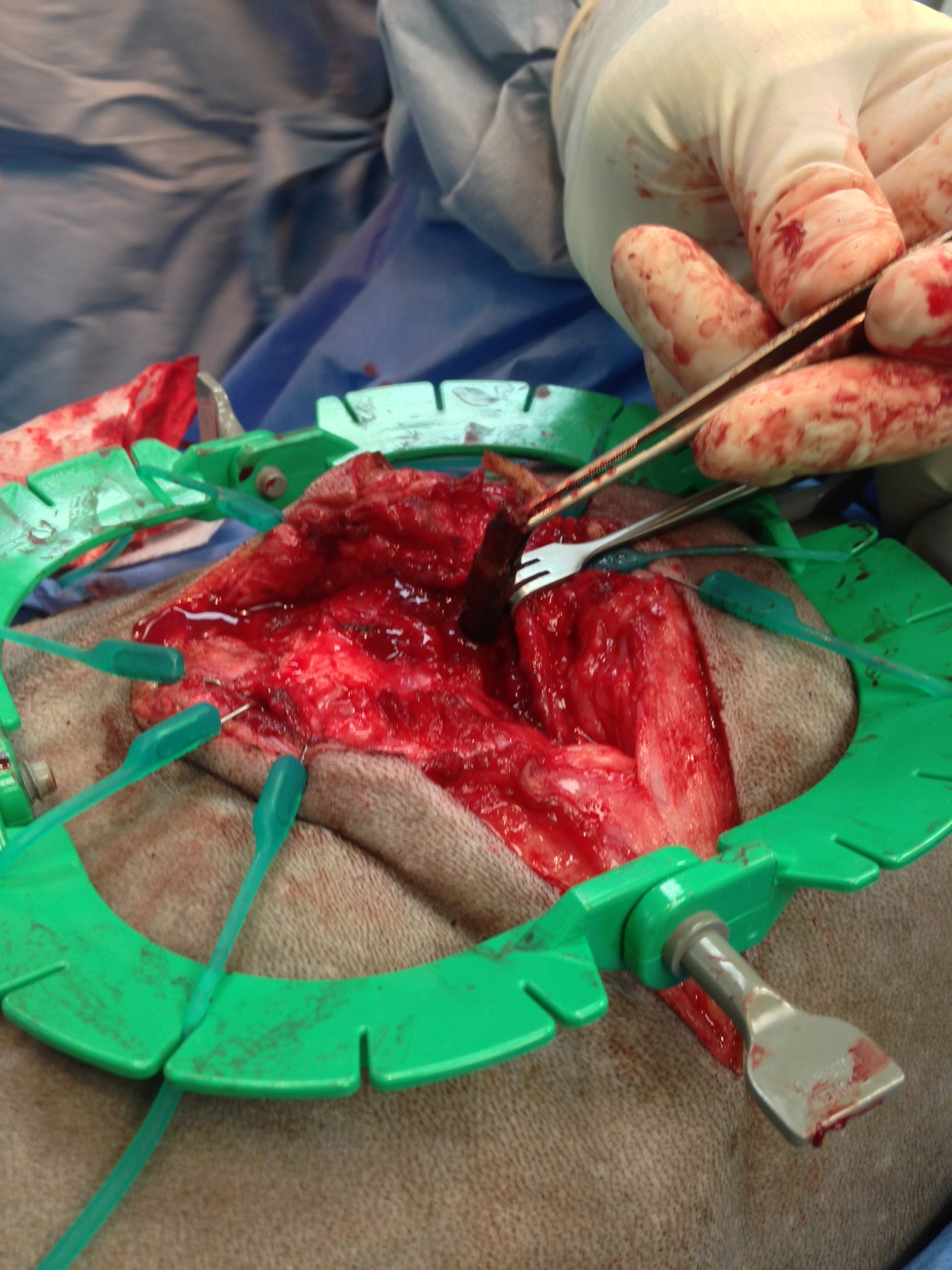
Here is the stick as it is lodged under the rib.
Here is the stick as it is lodged under the rib.

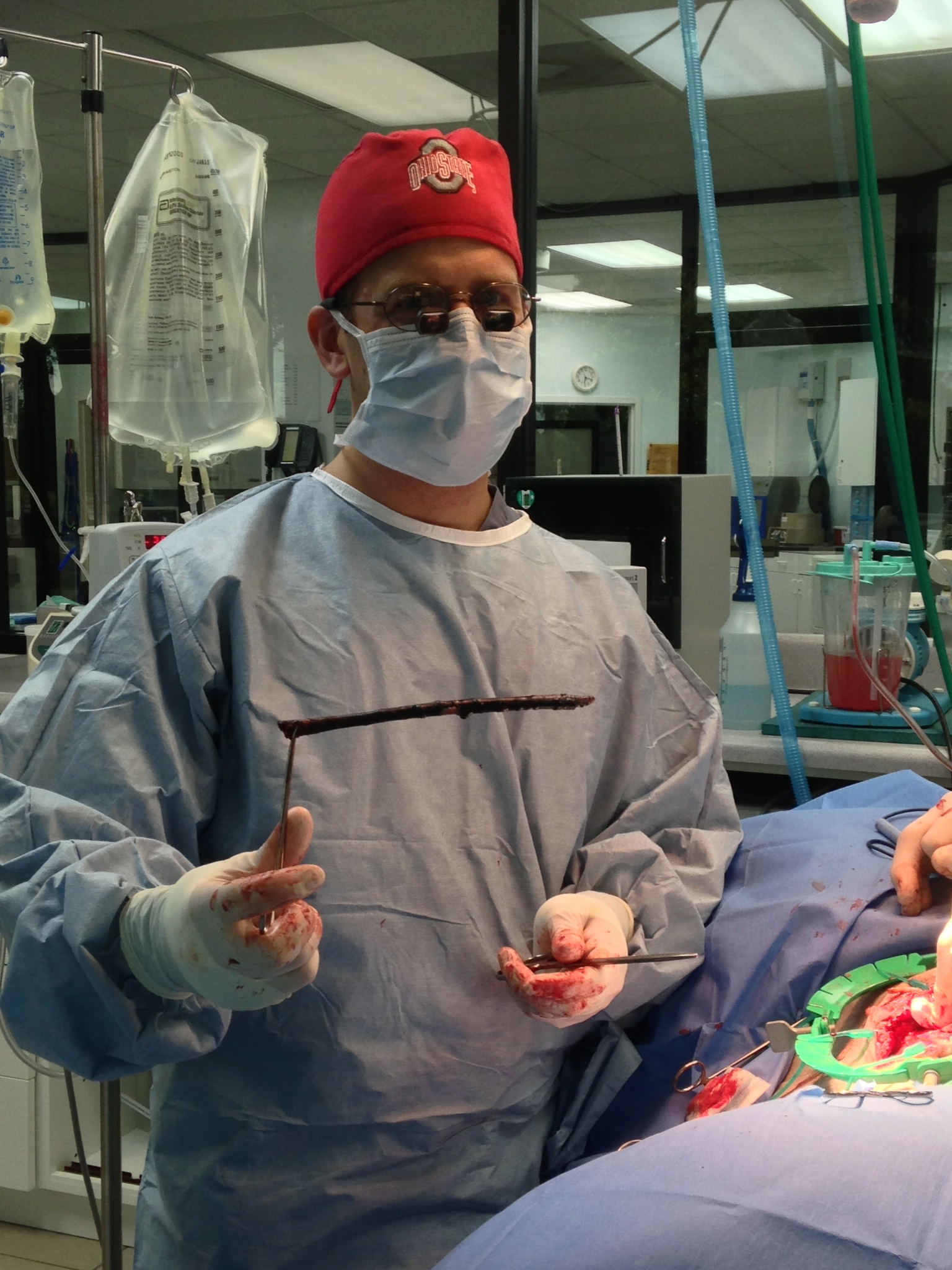
Here is the stick after it was removed from Luke
Here is the stick after it was removed from Luke

Elbow Dysplasia

Elbow Dysplasia

What is Elbow Dysplasia?

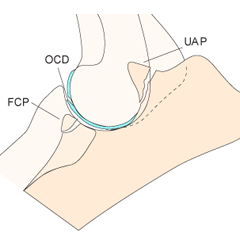
Elbow dysplasia is a multifaceted disease that can affect both juvenile and mature dogs. The complex of elbow dysplasia can be divided into the following categories:

–        Fragmented coronoid process (FCP)

–        Medial compartment disease (MCD)

–        Osteocondrosis dissecans (OCD)

–        Ununited anconeal process (UAP)

–        Elbow incongruency (EI)

–        Ununited medial humeral epicondyle

One or more of these problems can be affecting your pet and can cause a varying amount of lameness. We generally believe that elbow dysplasia is a congenital issue and affects mostly larger breed dogs, but can affect small breed dogs, as well.

Diagram of the canine elbow.

Diagram of the canine elbow.

The “ins” and “outs” of Elbow Dysplasia

Clinical signs: The most common clinical sign that is reported in dogs is front leg lameness. This can vary in intensity and can come on slowly or acutely (all of a sudden). Some pets will develop swelling at the elbow. Typically, limping becomes worse with activity and can subside with rest. Unfortunately, clinical signs can vary from pet to pet.

Diagnosis:  A thorough exam is recommended to isolate the elbow as the problem. It is important to evaluate the whole front leg as well as the opposite leg for any abnormalities. Because elbow dysplasia is congenital, both elbows tend to be affected (>80%).

Radiographs – In juvenile dogs, changes can be very minimal. Classic radiographic signs include: osteoarthritis (anconeal ridge is an early sign), sclerosis            (thickening) of the ulna, joint swelling and fragmentation of the medial coronoid process (33-50% visible on x-rays). OCD and UAP lesions typically will be evident on x-rays. It is standard to take three views of each elbow.

Patient with elbow dysplasia. Note the osteoarthritis present.

Patient with elbow dysplasia. Note the osteoarthritis present.

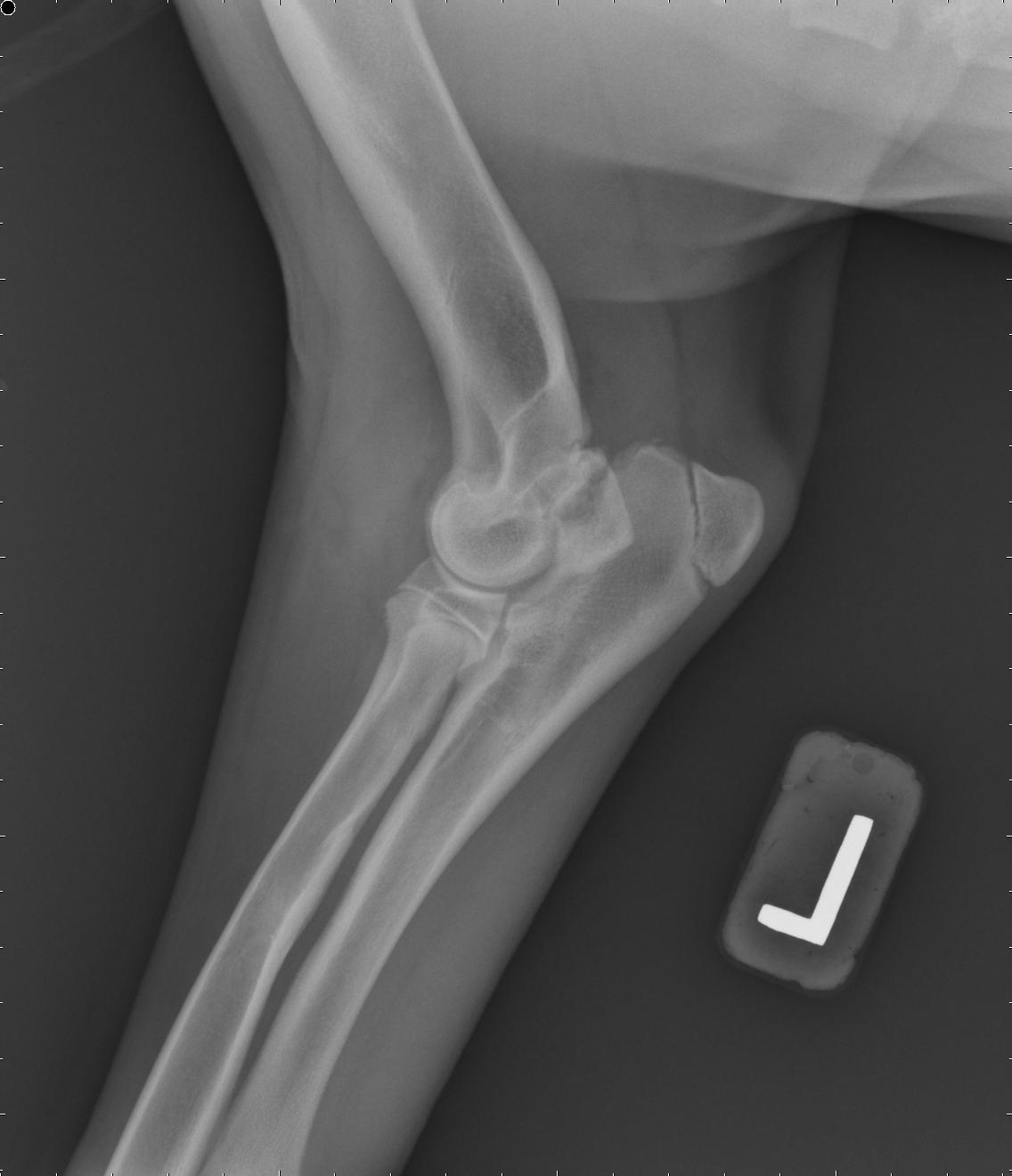
Patient with an ununited coronoid process.

Patient with an ununited coronoid process.

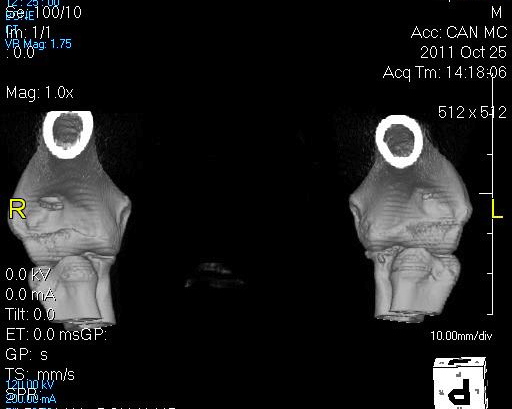
CT scan – Computed tomography (CT scan) may be necessary in some cases to make a diagnosis. A CT scan is a different type of x-ray and requires that your pet be anesthetized. The advantage of a CT scan is that it gives us a greater detailed image of the joint allowing us to detect mild changes. Sensitivity of a CT scan is >90% in diagnosing elbow dysplasia.

3-D image reconstruction of an elbow CT scan.

3-D image reconstruction of an elbow CT scan.

Treatment: Successful treatment of elbow dysplasia can occur with early diagnosis and treatment. The more advanced the arthritic changes (which will occur with time), the less successful treatment becomes. The following is a brief overview of the current treatments that are performed, usually in combination. 

Arthroscopy – Considered to be the “gold standard”, arthroscopy allows us to obtain critical information about the joint by looking in the joint via a minimally invasive approach. A scope and camera are introduced into the joint and the joint surfaces are assessed for arthritis, cartilage wear, incongruency and fragments. If fragments exist, these can be removed with arthroscopy. If substantial cartilage wear is present other procedures may be recommended.

Conservative management – this includes non-steroidal anti-inflammatories drugs (NSAIDs), supplements, physical therapy, acupuncture, and regenerative stem cell therapy. Unless your pet is very severely affected this therapy is often used in conjunction with arthroscopy and surgical management.

Advanced surgical procedures – Depending on the assessment of the joint, other procedures may be recommended such as the following: sliding humeral osteotomy (SHO) or unicompartment elbow replacement (CUE) for medial compartment disease, biceps tendon release and elbow replacement surgeries.

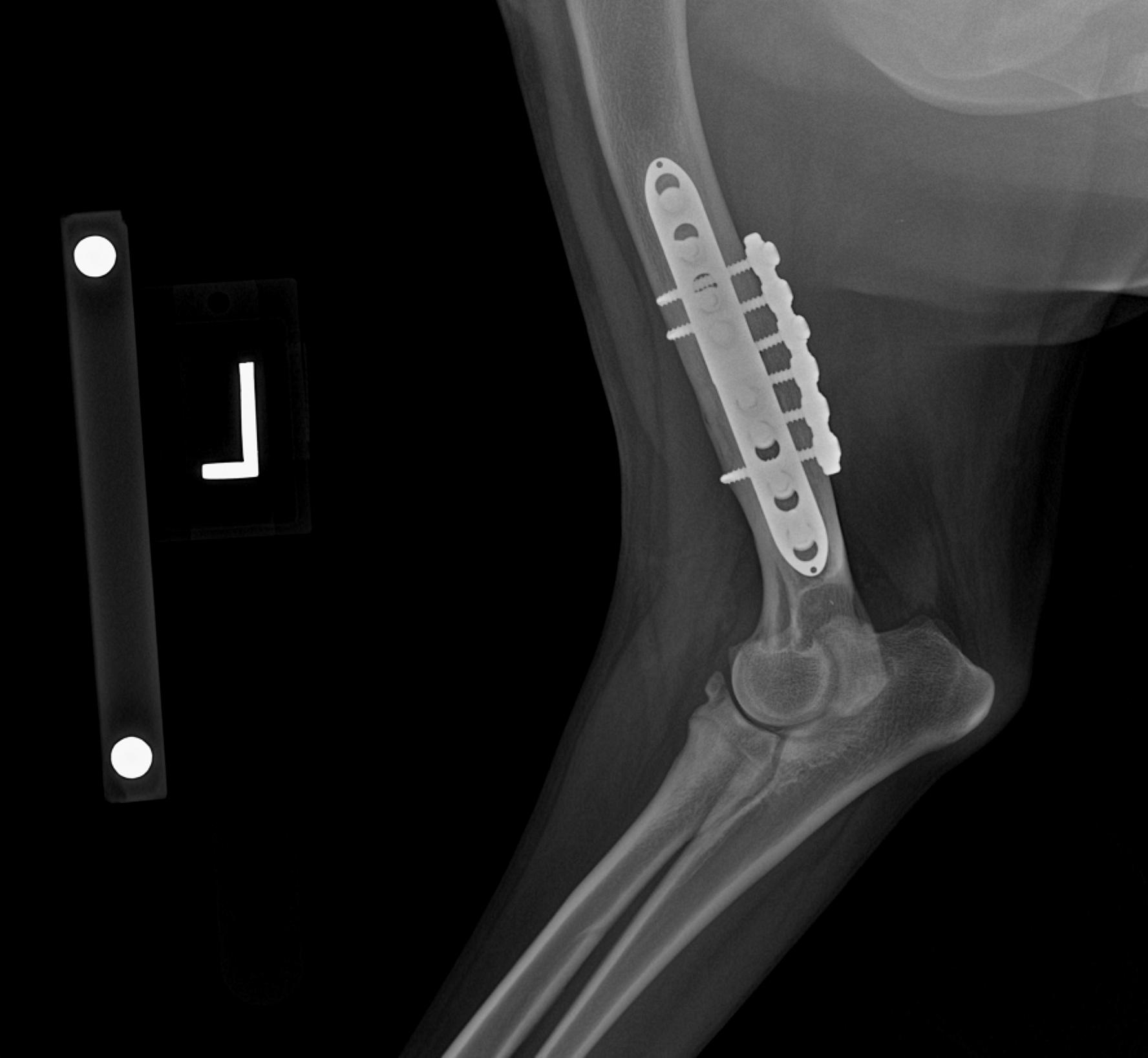
Patient with a Sliding Humeral Osteotomy (SHO).

Patient with a Sliding Humeral Osteotomy (SHO).

“Will my dog get better?

Prognosis – With early diagnosis and aggressive treatment, the success rate of the treating elbow dysplasia is ~80%. This generally entails elbow arthroscopy and sometimes more advanced procedures. Also, if changes are detected on the opposite leg, arthroscopy of this leg is recommended as well. In about 20% of the cases we need to combine multiple treatments and sometimes arthritis and discomfort will still progress.

Elbow replacement surgeries are still up and coming and can be considered in pets with “end-stage” changes to the elbow.

Kevin Benjamino DVM, DACVS

Dr. Kevin Benjamino is a board certified veterinary surgeon in Orange Park, FL at Affiliated Veterinary Specialists (AVS). Having worked at a local veterinary clinic while growing up in New Jersey, he knew that veterinary medicine was in his future at an early age. He first became interested in veterinary medicine at the age of 11 and began watching general surgeries under the guidance and direction of an amazing veterinarian, the late Dr. Eric Hudson. From there Kevin continued along in his desire to pursue a career in veterinary medicine and was further mentored by another talented veterinarian, Dr. Roberta Jehn.

Following high school, Dr. Benjamino was accepted into Purdue University, where he completed his undergraduate education with a Bachelors of Science (Biology) in 2000. During his undergraduate career, he was able to work for the veterinary surgery department at Purdue University’s School of Veterinary Medicine. This is where his interest in veterinary surgery began.

In the spring of 2000, Dr. Benjamino was accepted into The Ohio State University, College of Veterinary Medicine and graduated with a DVM degree in 2004. While enrolled in veterinary school, he had the opportunity to work for many distinguished surgeons and considers many of them mentors to this day. From 2004-2005, Dr. Benjamino completed a 1 year rotating internship in small animal medicine and surgery at Michigan Veterinary Specialists (Southfield, MI) and then spent 2005-2006 as a small animal surgery intern in Houston, TX at Gulf Coast Veterinary Specialists. Gulf Coast Veterinary Specialists is a world-renowned center for advanced surgical care with many distinguished surgeons and leaders in the field of veterinary surgery.

Starting in the fall of 2006, Dr. Benjamino was accepted as a small animal surgery resident at MedVet Medical and Cancer Center for Pets in Worthington, OH. MedVet is the largest private practice specialty referral hospital in the United States and is one of the leaders in veterinary specialty care in the world. Upon residency completion in 2009, Dr. Benjamino accepted an associate surgeon position back in Houston, TX at Gulf Coast Veterinary Specialists. While there, he was able to hone his surgical skills both in soft tissue and orthopedic surgery. In the winter of 2012, Dr. Benjamino and his family accepted a position with Affiliated Veterinary Specialists at their Orange Park location. Dr. Benjamino’s primary interests are in minimally invasive surgery, including both arthroscopy and laparoscopy/thoracoscopy. Other interests lie in wound management, thoracic surgery and orthopedic surgery to include fracture repair (minimally invasive), stifle (knee) surgery, elbow surgeries, and joint replacements.

Dr. Benjamino and Affiliated Veterinary Specialists are beginning a new phase of total joint replacements, to include BioMedtrix cemented and cementless total hip replacements, as well as a micro total hip system for small dogs and cats. In addition to total hip replacements, total knee and total elbow replacements will be added to help our patients.

Dr. Benjamino is very involved with continuing education in the field of veterinary surgery and has lectured on the local level, national, and international levels. He currently gives lectures on both orthopedic (primarily minimally invasive techniques) and soft tissue procedures at various conferences and teaching labs. He is also on developmental committees for new products involving regenerative medicine. Currently Dr. Benjamino is on the continuing education committee for the Jacksonville Veterinary Medical Society (JVMS).

– 1996-2000:  BS (Biology), Purdue University, West Lafayette, IN

– 2000-2004:  DVM, Ohio State University, Columbus, OH

– 2005: Internship, Michigan Veterinary Specialists, Southfield, MI

– 2006: Surgery Internship, Gulf Coast Veterinary Specialists, Houston TX

– 2006-2009:  Surgery Residency, MedVet Medical and Cancer Center for

Pets, Columbus, OH

– 2009-2012:  Gulf Coast Veterinary Specialists, Houston, TX

– 2012-Present: Staff Surgeon, Affiliated Veterinary Specialists, Orange

Park, FL

– 2012: Board Certification, American College of Veterinary Surgeons

(ACVS)


Association Memberships:

  • American College of Veterinary Surgeons (ACVS)
  • American Veterinary Medical Association (AVMA)
  • Florida Veterinary Medical Association (FVMA)
  • Texas Veterinary Medical Association (TVMA)
  • Ohio Veterinary Medical Association (OVMA)
  • Jacksonville Veterinary Medical Society (JVMS)
  • AO member

Fracture Management

Bone fractures in pets are a relatively common occurrence in veterinary medicine. Injuries to pets can occur many ways, with the most common being vehicular trauma (hit by car). This brief article is meant to inform owners that not all fractures should be managed the same way and that as fracture repair advances in the human orthopedic field so are the advances in the veterinary field. No longer do we need to rely on pins, wire, and a prayer. The advanced surgical techniques can be thanked due to our increasing appreciation of biomechanics and the different forces on various areas of the body. Many times I have been asked “can you cast that fracture?” The answer to the question is “sometimes”, however most fractures encountered have a much higher chance of healing with some sort of surgical fixation (internal or external). I always remind owners that with our canine or feline patients, they will be trying to use the fractured limb much sooner than we would, which means more pressure on our support. Also, be reminded that when we have a forearm (or upper arm) fracture we won’t be required to walk on it like our pet counterparts.

Our first goal with fracture fixation is how can we make this fracture stable immediately, that will last through the healing process. To do this the surgeon must have a full understanding of biomechanics to appreciate the different forces on the bone (tension, compression, etc). There is no such thing as “cookie-cutter” fracture repair. While many fractures are similar, none are exactly the same. Some may be comminuted (multiple pieces), develop fissures (splits down the long axis of the bone), exposure to the outside (open, contaminated), and be intra-articular (enter into the joint) and require special consideration. It is rare, in the day with veterinary specialists that limbs need to be amputated due to the fracture – the more common reason for amputation would be due to severe neurologic impairment (no feeling, etc). Other goals with fracture fixation include: how do we minimize trauma to soft tissue (skin,muscle, etc), minimize bleeding, minimize infection risk, and maintain blood flow and clots that initially develop around the fracture site that aid in quicker healing.

Fracture repair has evolved over the years from full exposure and full reconstruction of the bone (even with multiple fragments) to minimal reconstruction biological osteosynthesis) and soft tissue disruption (Minimally Invasive Plate Osteosynthesis (MIPO)). This articles goal is to introduce the reader to some of the newer technologies available to the veterinary surgeon and your pet. These techniques are aimed at early recovery and return to function of your pet. I would be remiss if I didn’t mention that exercise/crate restriction is needed during the post-operative phase and can be 8-12 weeks in duration, depending on the type of fracture and age of pet. Please follow the advice of your veterinarian.

Early plates that are still used today (and many times the appropriate choice) are called Dynamic Compression Plates (DCP) or Limited Contact – Dynamic Compression Plates (LC-DCP). There are many cases where this is either the most appropriate option or the only option. The plate must be placed flush against the bone after the bone is reconstructed or supported. Screws go through the plate into the bone through pre-drilled holes. Remember wood-working concepts, as the threaded holes in the bone accept the advancing screw, the screw starts to bring the bone to the plate as you tighten the screw. This bone-to-plate interface (touching/squeezing) is where this type of repair gets it strength. If there is no bone to plate contact, this becomes a very weak fixation. This also demands that the plate is precisely contoured to the bone before application. Some downsides to this fixation is that the fracture must be fully exposed and manipulated (delayed healing, increased risk of infection, soft tissue trauma to an already traumatized area) and that if not perfectly pre-contoured it could weaken the repair or offset the fracture alignment to a degree. There are advantages to this type of fracture repair as well, such as allowing the bone to accept some of the weight bearing load (if a two piece fracture), being able to compress the fracture ends and being able to compress fissures and fragments through the use of screws placed in “lag” (compression) fashion. So there is definitely a place for this type of fixation and in appropriate cases can be the best option.

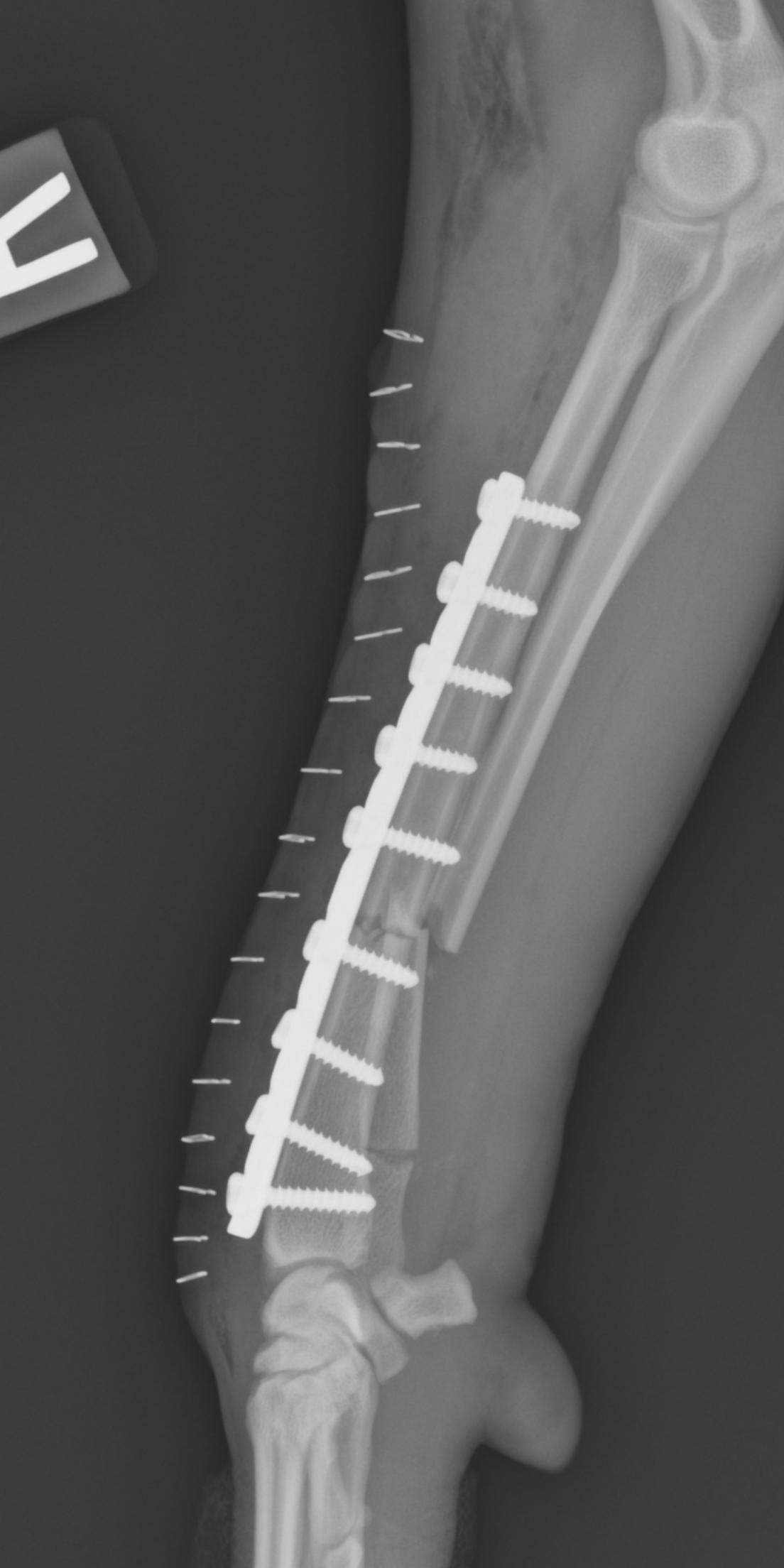
DCP plate

DCP plate used to stabilize a radius fracture.

Early fracture fixation that tried to minimize soft tissue trauma while providing a strong fixation was the external skeletal fixator (ESF) which encompasses both linear and circular external fixation. These allow the surgeon to place pins of varying sizes in the bone, where the ends remain outside of the limb and connect to a bar or ring for support. Case selection is key as with any type of repair and they certainly have their place in fracture fixation. Surgeon experience and knowledge of repair mechanics is necessary. Some ideal cases may be (but not limited to): some juvenile fractures, open (infected) fractures, intra-articular (or near joint) fractures, etc. The benefit of this fixation is that once the bone is healed, all the implants are removed. Also, sequential removal of pins can be performed to destabilize the repair – which can be beneficial in fractures that are delayed in healing.

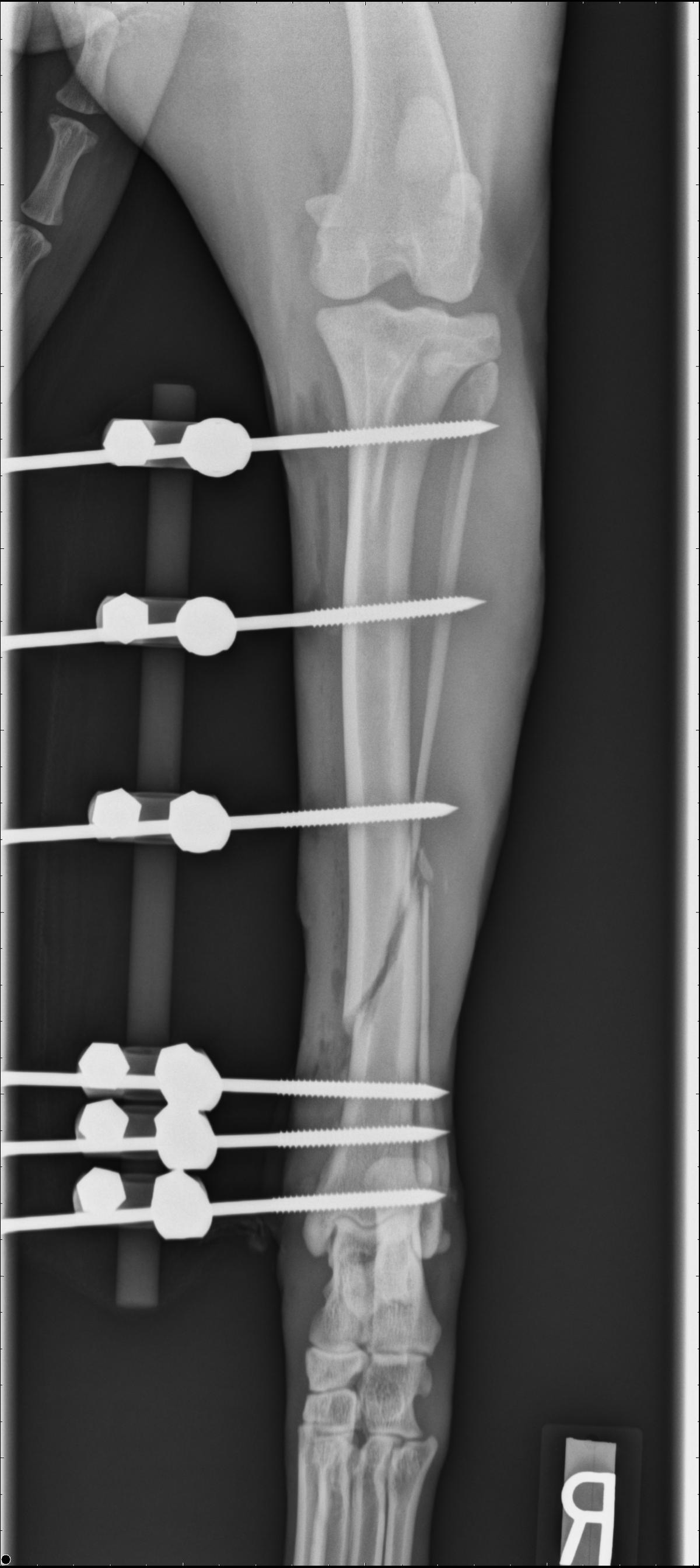
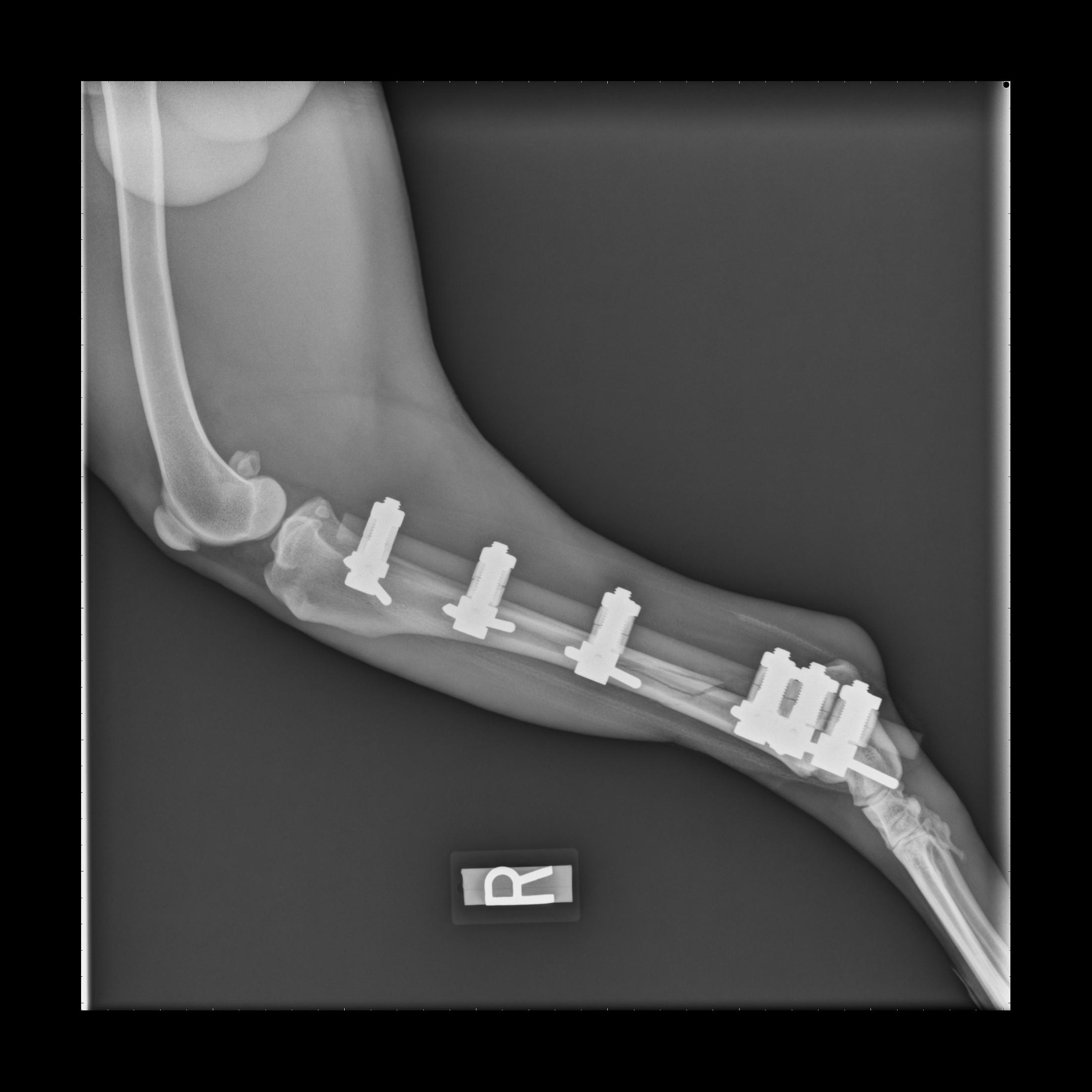
A linear external fixator used to stabilize a tibial fracture.

A linear external fixator used to stabilize a tibial fracture.

An external fixator used to stabilize a tibial fracture

An external fixator used to stabilize a tibial fracture

More recent repair options are locking plates. Many companies have began production of locking plates and this article is not meant to show favoritism to any company. The basic concept with this technology is that the screws used actually lock into the plate to provide more stabilization. Previous designs (see above) depended on the bone to plate interface. Locking plates are dependent on the strength of the screw to plate interface, which is typically much stronger. Screws “lock” into the plates by either a conical locking mechanism (Morse taper phenomenon – for all the engineers in the audience) or by threading into the plate (threads on the screw heads match the threads in the plate holes). Many hours of mechanical testing has gone into these types of plates both on the human and veterinary side and have proven their strength. A benefit of this increased strength is the need for less screws than in the earlier described plate designs. We can achieve our desired strength of fracture repair with less implants (less can be more with regards to fracture fixation). Another big benefit is that we no longer are so concerned about contouring the plate to the bone , which allows us to not touch the fracture site to aid and facilitate healing. Remember standard plates bring the bone to the plate as the screw tightens, with the locking plate design, as the screw contacts the plate and locks the bone stays stationary. This design also allows us to perform MIPO techniques with a strong fracture fixation. By in large, this type of fracture fixation is leading the way in both human and veterinary surgery. The downside is that these plating systems are usually only available at veterinary surgical centers, but again they offer a great advantage to fracture management.

Preoperative tibia/fibula fracture

Fracture repaired using a minimally invasive (MIPO) technique and locking plate.

Fracture repaired using a minimally invasive (MIPO) technique and locking plate.

Fracture repaired using a minimally invasive (MIPO) technique and locking plate.

Fracture repaired using a minimally invasive (MIPO) technique and locking plate.

Again, when deciding what type of fracture fixation is best there are many factors to consider and that decision would be made best by your veterinary surgeon. Also, not all types of fixation have been mentioned in the article. We are very fortunate to be living in this time where veterinary medicine is advancing so we can provide greater benefit for our best friend and loyal family members.

– Kevin Benjamino DVM, DACVS